
Pressure treated pine
The default, and the least expensive way to get a solid deck. It wants cleaning and resealing on a cycle, and it will check and gray if you let it. Boards are replaceable one at a time, which is a real advantage over decades.
Enhance your outdoor space with a custom-built deck by Lamar Homes Roofing & Construction.
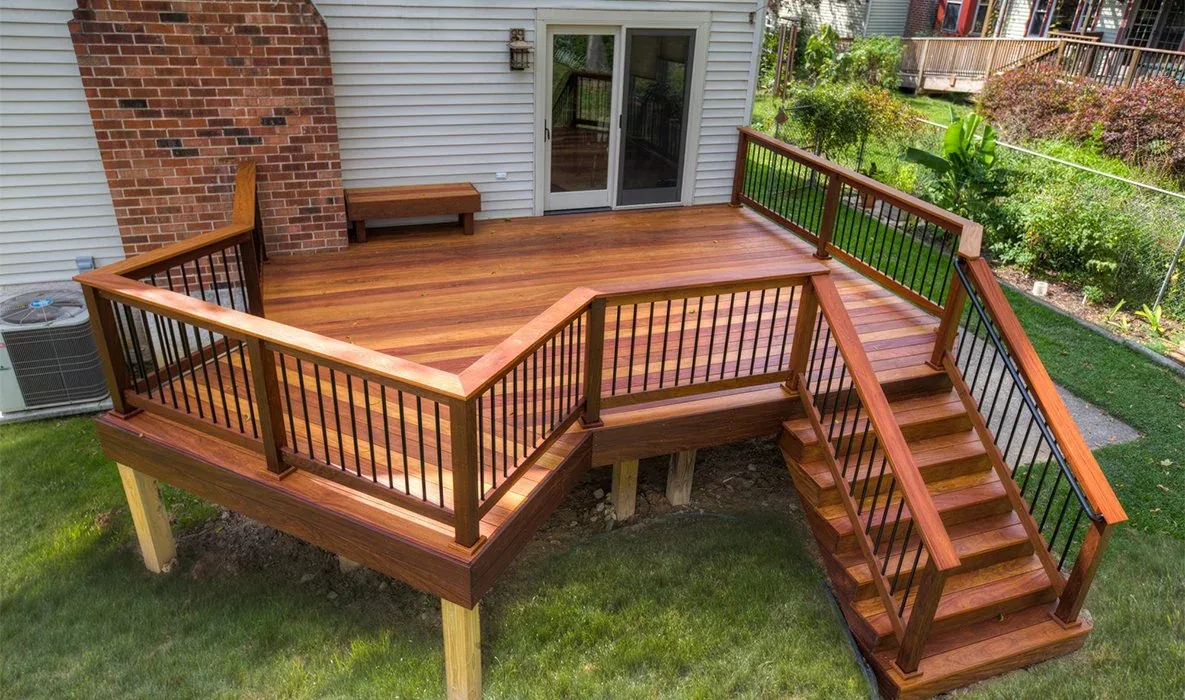
At Lamar Homes Roofing & Construction, we design and build beautiful, durable decks that elevate your home's outdoor space. Whether you're looking for a cozy backyard retreat or a spacious area for entertaining, we build it to last.
Whether you're replacing an old deck or starting from scratch, Lamar Homes Roofing & Construction is here to help. Let's turn your backyard into your new favorite place to be.
Call us today for a free deck consultation: (984) 224-7182
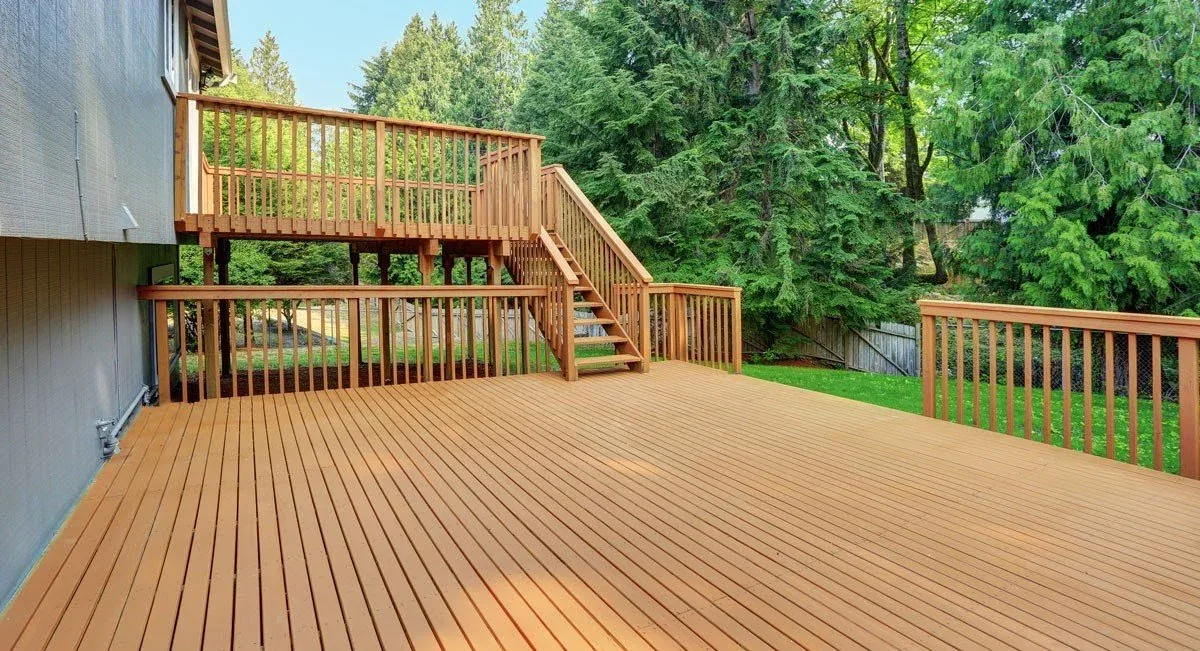
Take a look at some of the custom decks we’ve designed and built for homeowners across North Carolina. From cozy backyard escapes to large entertainment spaces, each project reflects our commitment to craftsmanship.
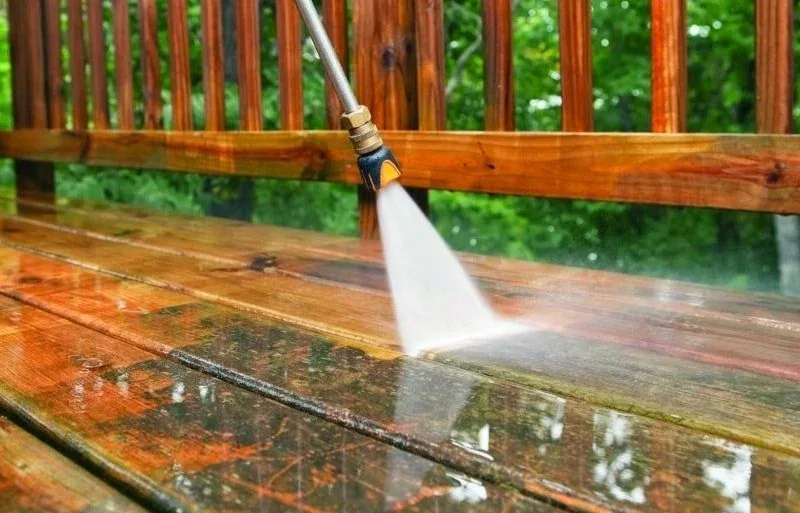
A deck is a structure bolted to a house, and the failures that matter are all at the connections. North Carolina's residential code is specific about them, and the specifics are worth knowing before you compare quotes.
Footings go a minimum of 12 inches below finished grade, with the footing sized to the area it carries, from 8 by 16 inches up to 24 by 24. The ledger board, where the deck meets the house, has to be flashed with corrosion resistant flashing, and the code specifically prohibits aluminum flashing on a deck because it corrodes against treated lumber.
Stair stringers cannot span more than 7 feet between supports. Joist spans are set by species and spacing rather than by eye. None of this is visible on a finished deck, which is exactly why it is the first thing to ask a builder about.
The choice is less about looks than about what you are willing to do to it every couple of years.
The default, and the least expensive way to get a solid deck. It wants cleaning and resealing on a cycle, and it will check and gray if you let it. Boards are replaceable one at a time, which is a real advantage over decades.
Better looking than treated pine and naturally more resistant to rot and insects. Softer underfoot and softer to damage. Our humidity is hard on it if the finish is allowed to fail, so it rewards maintenance more than it forgives neglect.
Wood flour and plastic. No sealing, no staining, and it holds its color far longer than wood. Costs more up front, and the darker boards get genuinely hot in a Raleigh July, which matters if anyone walks it barefoot.
All plastic, the lightest maintenance of the four and the most expensive. It does not absorb water at all, which is why it shows up on pool surrounds and shaded low decks where wood struggles.
Where the budget quietly goes. Cable, metal balusters, wood, composite: the rail system often costs more per foot than the deck surface and is the part people touch every day.
Treated lumber regardless of what the surface is. A composite deck on an undersized frame is still an undersized deck, and resurfacing an old frame without checking it is how a good looking deck fails.
Plenty of the decks we look at in Raleigh do not need replacing. The surface boards have gone and the rails feel loose, but the posts, footings and beams are sound. Resurfacing a good frame costs a fraction of a rebuild.
What we check first is the ledger, because that is the connection that fails quietly. Unflashed or badly flashed ledgers let water into the band joist for years before anything shows, and that is the failure that drops a deck rather than just aging it.
After that it is footings, post bases, joist hangers and the stair stringers. If those pass, we quote the repair. If they do not, we show you why with photographs rather than asking you to take our word for it.
Almost always, and the build has to meet the North Carolina Residential Code either way. We pull the permit, build to the code and meet the inspector, so the deck that gets signed off is the deck you were quoted.
North Carolina's residential code sets a minimum footing depth of 12 inches below finished grade, with the footing size scaling to the area it carries, from 8 by 16 inches up to 24 by 24 inches. Undersized footings are the most common fault we find on older decks.
Often yes. If the posts, footings and ledger are sound, the boards and rails can be replaced on the existing frame for a fraction of a rebuild. If the ledger was never flashed properly, that gets fixed first, because it is the connection that fails quietly.
The code prohibits it in deck construction. Aluminum corrodes in contact with the preservatives used in treated lumber, so the flashing that is supposed to keep water out of the framing degrades instead.
Wood costs less up front and needs cleaning and resealing on a cycle. Composite costs more and needs almost nothing, though the darker boards get hot underfoot in a Raleigh July. We build both and will tell you which fits how you actually use the deck.
Most residential decks run a few days to a couple of weeks on site once the permit is issued. Footings, inspection stages and weather set the pace more than the framing does.
And more. Don’t see your city? Call (984) 224-7182.
We get on the roof, photograph what is actually there, and hand you a written report with a price. No charge, and no obligation to book the work with us. If the roof has years left in it, that is what the report will say.
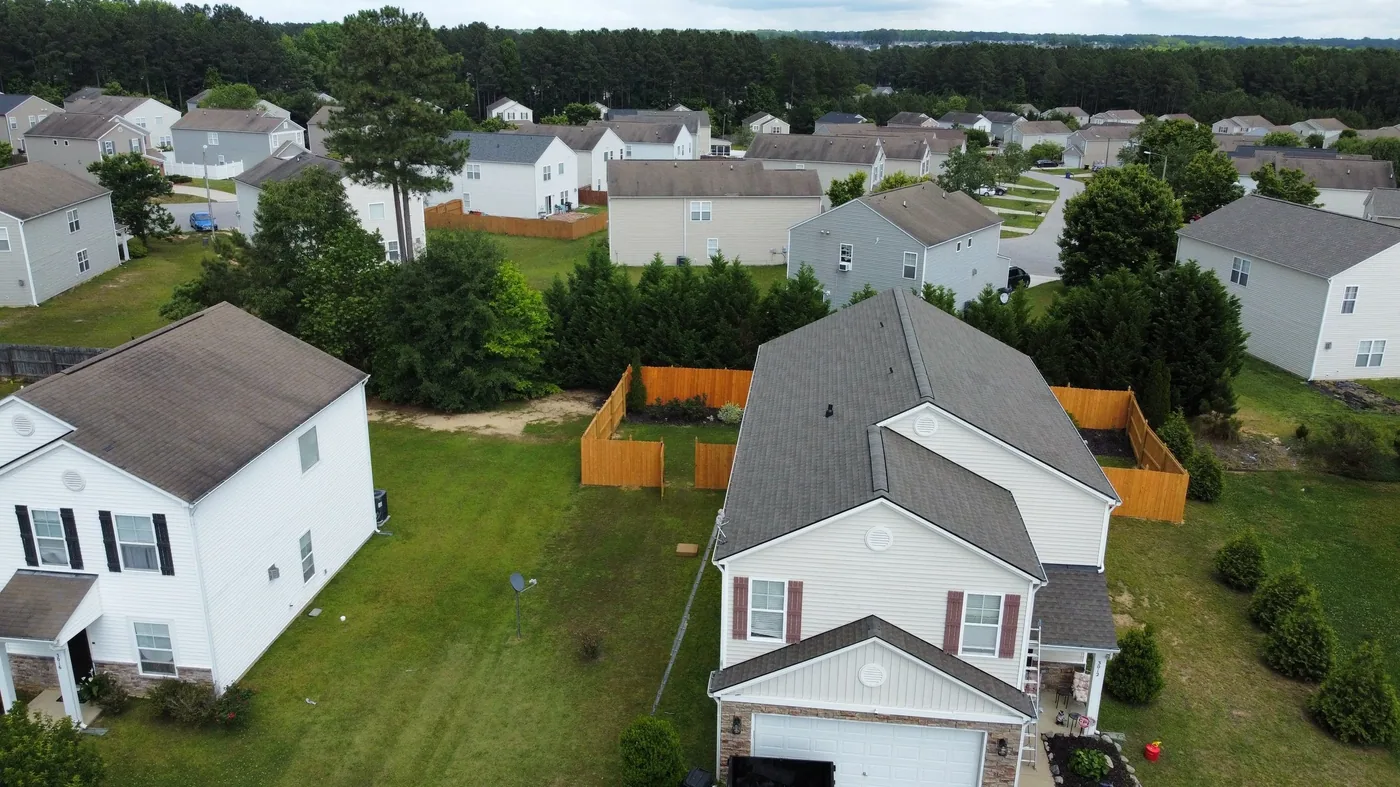
Whether you need a roof replacement, roof repair, or annual inspection, we’ve got you covered.