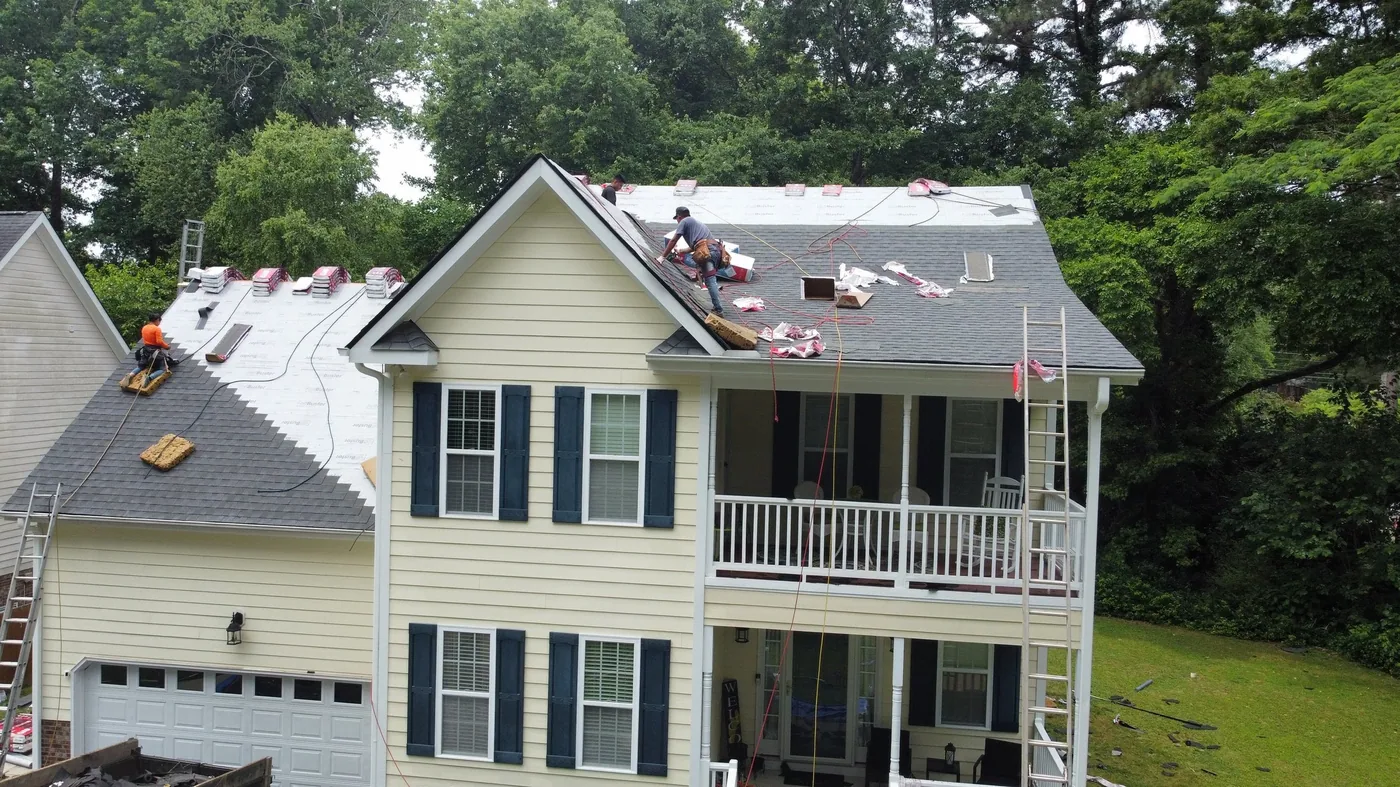
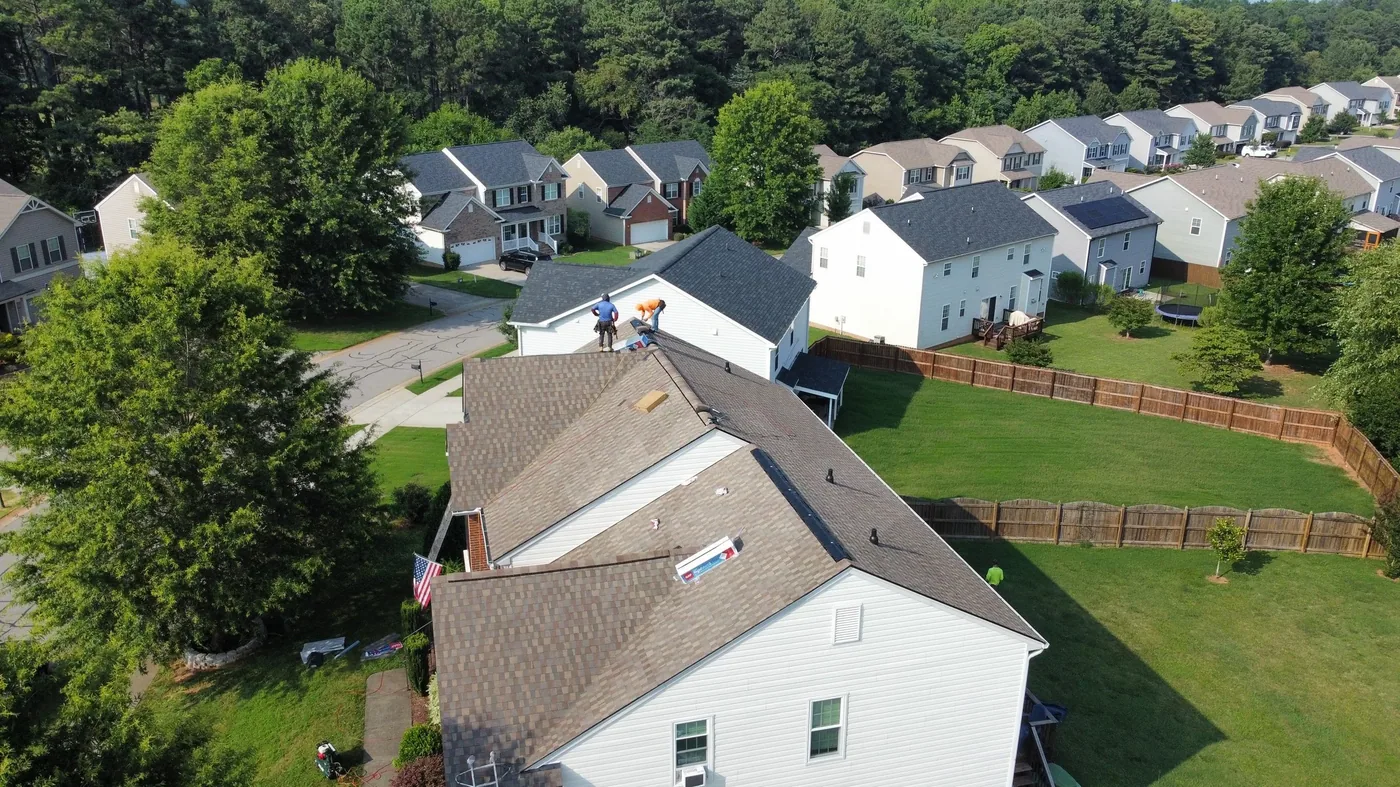
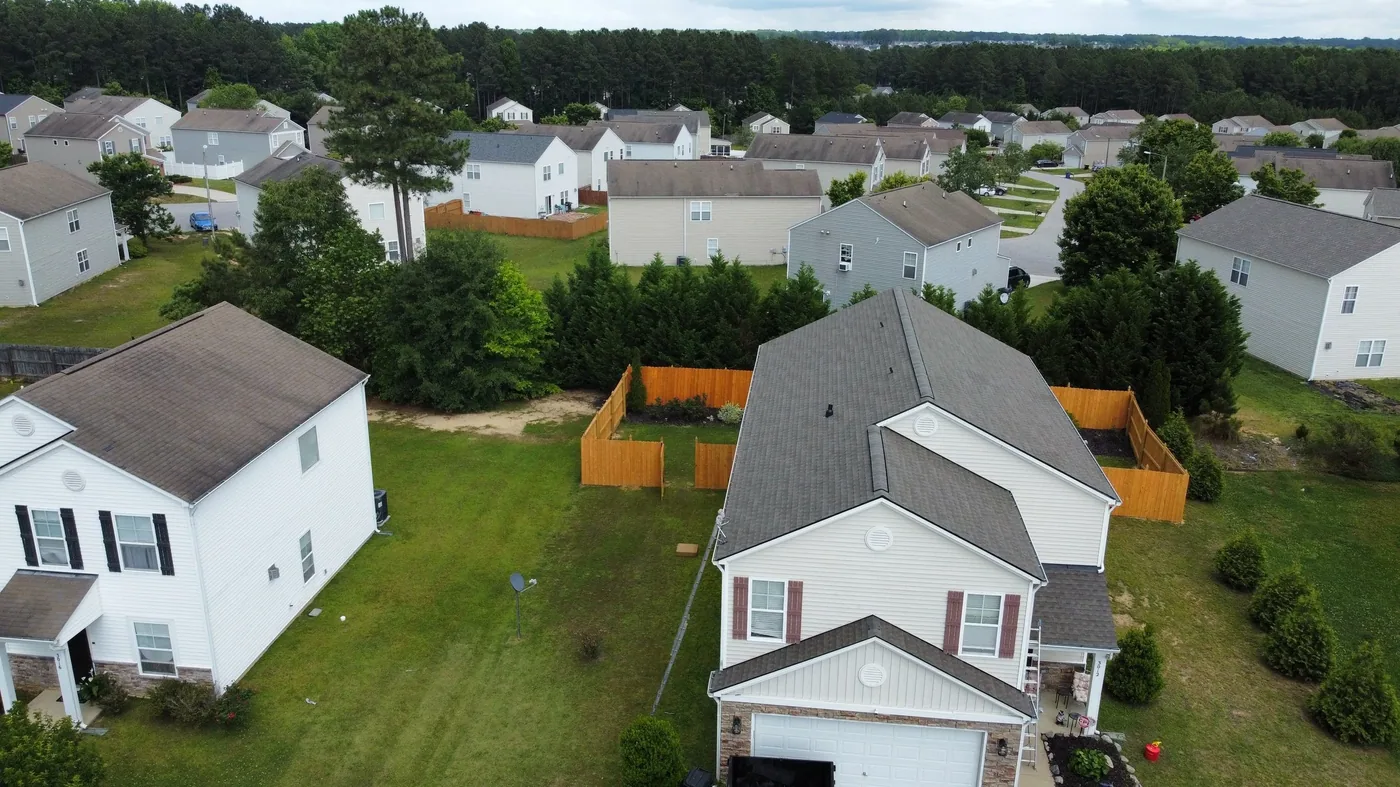
Hail Damage on a Roof: What It Looks Like, and What It Does Not
Five signs worth checking, ordered so the ones you can see from the ground come first, and three things that get mistaken for hail damage every spring. The second list is the one that will save you money.
The short version
Why this page starts with what hail damage is not
A roofer writing about hail damage has an obvious incentive, so here is the thing that incentive would normally bury.
The Insurance Institute for Business and Home Safety publishes a checklist for this, and it includes a list of look-alikes. One line from it: if you see that some granules have come off your shingles, this does not mean there is hail damage. IBHS lists granule loss along the edge of shingles as normal natural weathering, and separately notes that heavy rain can knock granules off by itself.
Grit in the gutter after a storm is the single most common reason a homeowner is told they need a new roof. It is also, on its own, evidence of a roof doing what roofs do.
Start with the metal, from the ground
IBHS says check air conditioning units, gutters, flashing and downspouts for spatter marks and dents. Soft metal records a hailstorm. It is free to look at and you never leave the yard.
Look for a random pattern, not a mark
Hail falls where it falls. Damage in a line or clustered in one spot is usually a branch, a tool or foot traffic.
Measure the hail, do not estimate it
NOAA's Storm Prediction Center encourages measurement rather than estimation. Photograph a stone next to a ruler while it is still on the ground.
The five signs below are ordered by how safely you can check each one, most checkable first, worked out in code from that one key rather than arranged by hand. That is not a convenience ranking: the signs you can read from the ground cost nothing, so there is no reason to start with the ones that put you on a wet roof covered in loose granules. We repair hail-damaged roofs for a living, so read all of this knowing that.
The five signs
What IBHS actually tells you to look for
Ordered by how safely you can check it. The first two need nothing but your eyes and a walk around the house.
1. Spatter marks and dents on anything metal, the first thing to look at, and you never leave the ground
Eye level At eye level, without looking at the roof.
IBHS tells you to look for spatter marks or impact dents on items like air conditioning units, gutters, metal flashing and downspouts. This is the most useful instruction on this page. Soft metal records a hailstorm the way a shingle does not: it dents, and the dent stays. If the condenser cabinet and the downspouts are clean, that is real evidence about what landed on your roof, and you found it standing in the yard.
The catch. Dents on metal prove hail hit the property. They do not prove the roof is damaged, because the metal is softer than the shingle. Read it as the signal that it is worth looking further, not as the finding itself.
2. Damaged ridge caps, the most exposed shingles on the roof, and often visible from the ground
No ladder Visible from the ground.
IBHS singles these out: ridge caps are especially vulnerable on an asphalt shingle roof. They sit at the top, they are folded over an edge, and they take hail from every direction instead of one. On most houses the ridge line reads clearly from across the street, and binoculars will do the rest.
The catch. The ridge is also where normal wear shows first, for the same reason it is where hail shows first. A ridge cap that looks tired is not automatically a hail finding.
3. A random pattern of impact marks, the pattern is the test, not the individual mark
Closer look Needs a closer look, ladder or camera.
IBHS's wording is a random pattern of impact marks on shingles, and the word doing the work is random. Hail falls where it falls, so genuine hail bruising has no order to it. Damage in a line, in a row, or clustered in one small area is usually something else: a branch, a tool, foot traffic, or whoever was last up there. Looking for the pattern rather than the mark is what separates a real finding from a hopeful one.
The catch. You need enough of the roof in view at once to judge whether a pattern is random, which a photo of one shingle cannot tell you. This is the point where someone with a camera and a safe way up is worth more than another look from the driveway.
4. Bruising you can feel but not always see, the sign most people miss entirely
On the roof Only found on the roof.
IBHS describes bruising as soft spots you can feel when pressing on the shingle. That is a tactile test, not a visual one, which is why hail damage gets missed on roofs people have looked at. The impact can break up the mat underneath while the surface still looks much as it did. Pressing on it finds a give that a photograph will not show.
The catch. This one cannot be done from the ground, from a ladder, or from a drone, and pressing on shingles across a whole roof is how an inexperienced person adds damage while looking for it. It is the strongest argument on this page for having somebody who does this for a living go up instead of you.
5. Cracks or breaks where hail struck, unambiguous when you find it
On the roof Only found on the roof.
IBHS lists cracks or breaks in shingles where hail has struck. This is the least arguable sign on the page, because a fractured shingle is no longer doing its job and there is not much to debate about it. It is also the one that makes the roof an immediate problem rather than a monitoring question, since a broken shingle is an opening.
The catch. A crack can be found from the ground only by luck. Finding them reliably means being on the roof, and a hail-struck roof has loose granules on it, which is a slipping hazard on a slope.
Every sign above is from the IBHS hail damage checklist. IBHS is the research arm funded by the property insurance industry, which makes it an unusually useful source here: it has no interest in finding damage on your roof. Sources read 21 October 2026.
The three look-alikes
Things that are not hail damage
All three are on the IBHS look-alike list. All three get written up as hail damage every spring.
Granules in the gutter, on their own
This is the big one, and it is worth being blunt because a lot of roofs get condemned on it. IBHS says it in plain words: if you see that some granules have come off your shingles, this does not mean there is hail damage. Granule loss along the edge of shingles is listed as normal natural weathering. Shingles shed granules their whole life. A handful in the downspout after a storm is a roof behaving normally, and anyone treating it as proof of a claim is telling you something about themselves rather than about your roof.
Granules washed off by heavy rain
IBHS names this separately, and the distinction matters because hail almost never arrives on its own. Heavy rain can knock granules off by itself, so the storm that put grit in your gutter is not necessarily the hail in that storm. The two events came together and only one of them is a claim.
Uniform wear or discoloration
Listed by IBHS as a look-alike, and the giveaway is in the word uniform. Weathering happens evenly across a slope because the whole slope gets the same sun and the same rain for the same number of years. Hail does not land evenly. A roof that looks consistently worse on the south face than the north is describing twenty summers, not one afternoon.
Had hail and want a straight answer?
We will photograph the roof and tell you what we find, including when what we find is a roof that is fine. Free inspection, no obligation.
Measuring it
The size reference, and why guessing inflates it
NOAA's Storm Prediction Center publishes this table and prefaces it by encouraging measurement, not estimation, of hail size.
One thing this page will not give you, because nobody publishes it: a hail size at which an asphalt shingle starts to fail. We went looking for it. IBHS, the Asphalt Roofing Manufacturers Association, the National Roofing Contractors Association and the North Carolina Department of Insurance all describe hail damage without naming a diameter. The 1.5 and 2.0 inch stones above are what IBHS finds worth testing, which is a useful anchor and is not the same as a threshold. If somebody tells you one inch hail definitely damaged your roof, or definitely did not, they have gone past what the published research supports.
Impact ratings
What a Class 4 shingle is, and what it is not
If you are replacing a roof in a part of the state that gets hail, impact resistance is worth asking about, and it helps to know what the rating means.
ARMA describes two tests. UL 2218 drops steel balls of various diameters from heights ranging from 12 to 20 feet onto a deck of shingles. FM 4473 launches ice balls of various diameters from a pneumatic device instead. Both rate four classes, with Class 4 representing the highest level of impact resistance.
Two honest caveats. The first is ARMA's own: these tests bring valuable insight to wind, rain, fire, impact or sun exposure, but do not fully replicate real-world conditions. A Class 4 shingle is a shingle that passed a laboratory test, not a shingle hail cannot hurt.
The second is the part worth a phone call. ARMA notes an impact rating may help homeowners obtain a reduction in home insurance costs in some areas and from some insurers. That is a question for your agent before you choose a shingle, because if your insurer gives a credit, the upgrade partly pays for itself, and if it does not, you are buying it purely for the roof.
IBHS publishes its own shingle testing, and it is careful about what that testing is for. Its protocol is designed, in its words, exclusively for research and product comparison purposes, and it states it is not intended for insurance claims or legal claims handling, product warranties or legal standards. So it is a good way to compare two shingles and not a way to argue a claim.
What to do first
The order the Department of Insurance sets out
This is the state regulator's guidance for homeowners after a storm, not ours, and the last step is the one people get wrong.
Report the loss to your insurer
Contact your homeowners insurance agent or company. NCDOI notes that even if you hold a separate NCIUA windstorm or hail policy alongside your homeowners policy, your primary homeowners insurer will investigate and adjust a windstorm or hail claim.
List the damage and photograph it
Make a list of the damages and take clear pictures before you make any temporary repairs. The photographs taken before anyone touches anything are the ones that matter.
Make temporary repairs and keep the receipts
Stop the water getting in, and keep every receipt for what that cost.
Do not make permanent repairs yet
NCDOI is specific: do not make permanent repairs until your insurance company has had a chance to inspect the damage and you have agreed on the cost of the repairs. Replacing the roof before that conversation is how people end up paying for it themselves.
Steps from the North Carolina Department of Insurance guidance on dealing with the aftermath of a disaster. Sources read 21 October 2026. We do not quote a statutory filing deadline on this page because we could not verify one in the North Carolina statutes. What certainly does bind you is the notice requirement in your own policy, so read that and report the loss promptly rather than relying on a deadline somebody quoted you.
The door knockers
What the state tells you about post-storm contractors
This includes us, and we would rather you read it anyway.
After every significant hailstorm in the Triangle, crews arrive from out of state and work the neighborhoods door to door. The Department of Insurance publishes advice about exactly this, under a heading it calls Fraud: Hitting the Roof. Four things from it:
Be wary of anyone going door to door
NCDOI's wording: beware of contractor or roofing representatives going door-to-door after a disaster.
Call your insurer before you sign anything
Call your insurance agent or insurance company before signing a contract or paying for repairs.
Licensed and insured, verified
Work with only licensed and insured contractors. Ask, and then check rather than take the answer.
Never pay in full up front
Never pay a contractor in full or sign a completion certificate until the work is completed.
We are a Raleigh company, we have been here the whole time, and we will still be here when the out-of-state plates have gone. That is the argument we would rather make than a knock on your door.
Questions
Hail damage questions
What does hail damage look like on a roof?
IBHS names four things on the shingles: a random pattern of impact marks, bruising that shows up as soft spots you can feel when you press on the shingle, cracks or breaks where hail has struck, and damage to the ridge caps, which are the most exposed shingles up there. It also tells you to check anything metal, air conditioning units, gutters, flashing and downspouts, for spatter marks and dents. The metal is the easiest place to start because you can see it from the ground.
How big does hail have to be to damage a roof?
No authority publishes a threshold, and we looked. IBHS, ARMA, NRCA and the North Carolina Department of Insurance all describe hail damage without giving a diameter at which asphalt shingles begin to fail. The closest figure we could verify is what IBHS uses in the lab: it tests commercially available asphalt shingles with 1.5 and 2.0 inch laboratory manufactured hailstones. That tells you the sizes researchers find worth testing. It is not a threshold, and anyone quoting you a precise one is going beyond what the published research supports.
Is granule loss hail damage?
Usually not. IBHS is direct about it: if you see that some granules have come off your shingles, this does not mean there is hail damage. It lists granule loss along the edge of shingles as normal natural weathering and notes that heavy rain can knock granules off too. Shingles shed granules for their whole service life. Granule loss matters when it comes with the other signs, in a random pattern, alongside dented metal, not on its own.
Should I measure the hail?
Yes, and photograph it next to something of a known size. NOAA's Storm Prediction Center is explicit that it encourages measurement rather than estimation of hail size, which is a polite way of saying everybody guesses high. Its reference puts a quarter at 1.00 inch, a golf ball at 1.75 and a hen egg at 2.00. A photograph of hail on a ruler, taken while it is still on the ground, is worth more later than anyone's recollection of it.
Do impact-resistant shingles stop hail damage?
They are tested for it rather than immune to it. ARMA describes two standards: UL 2218 drops steel balls from heights of 12 to 20 feet onto a deck of shingles, and FM 4473 launches ice balls from a pneumatic device. Both rate four classes with Class 4 the highest. ARMA also says an impact rating may help homeowners get a reduction in insurance costs in some areas and from some insurers, which is worth asking yours about. The caveat is ARMA's own: these tests bring valuable insight but do not fully replicate real-world conditions.
What should I do first after a hailstorm?
The North Carolina Department of Insurance sets out the order. Contact your homeowners insurance agent or company to report the loss. Make a list of the damages and take clear pictures before you make any temporary repairs. Keep the receipts for temporary repairs. And the one people get wrong: do not make permanent repairs until your insurance company has had a chance to inspect the damage and you have agreed on the cost of the repairs.
Someone knocked on my door offering a free roof inspection. Should I let them?
The Department of Insurance's advice is to beware of contractor or roofing representatives going door-to-door after a disaster, and to call your insurance agent or company before signing a contract or paying for repairs. It also says to work with only licensed and insured contractors, and never to pay a contractor in full or sign a completion certificate until the work is completed. We will inspect your roof for free and we would still rather you called us than let anybody in off the street, including us.
Keep reading
Related guides and calculators
Hail is the one storm that damages a roof without looking like it did.
Real lifespans by material, and what heat and storms take off the top.
Free on-site inspection
Get your roof checked after the storm
We get on the roof, photograph what is actually there, and hand you a written report with a price. No charge, and no obligation to book the work with us. If the roof has years left in it, that is what the report will say.