
3-tab asphalt, 12 to 18 years
The budget shingle. A single flat layer, lighter, and the first to lose granules. Fine on a rental or a short hold, rarely the economical choice on a home you intend to keep.
Ratings on the wrapper and real life in North Carolina are two different numbers. Here is what each material actually gives you here.
An architectural asphalt roof is rated for 30 years, and our guide to shingle types explains why that number belongs to architectural rather than 3-tab. In the Triangle it usually gives 20 to 25. That gap is not a defect and it is not a bad install. It is what heat, humidity and a run of summer storms do to asphalt.
The rating assumes conditions no roof in North Carolina actually experiences. Attic temperatures here sit well above what the test lab uses, and heat is what drives the oils out of a shingle. Once those go, the granules follow, and once the granules go the mat is bare to the sun.
So treat the number on the wrapper as a ceiling rather than a forecast, and plan around the lower figure.
Ranges below are what we see on homes across the Triangle, not manufacturer ratings.
The budget shingle. A single flat layer, lighter, and the first to lose granules. Fine on a rental or a short hold, rarely the economical choice on a home you intend to keep.
What most Triangle homes have and what most should. Heavier, layered, and far better in wind than 3-tab. The sensible default.
Thicker again, and it reads as slate or shake from the curb. You are paying for appearance and a few extra years.
Outlasts two asphalt roofs. Costs roughly two to three times as much up front, so it makes sense when you are staying put, not when you are selling.
Handsome and demanding. Our humidity encourages moss and rot, so it needs real maintenance to reach the top of that range.
TPO and modified bitumen on porches and additions. Seams are what fail, and seams are what to inspect.
Attic ventilation. The biggest one, and the one most homeowners never consider. A poorly vented attic bakes the shingles from underneath. Two identical roofs, one vented properly and one not, can differ by five years or more.
Gutters. Pine needles pack tighter than leaves and knit into a mat water cannot pass. The water backs up under the shingles at the roof edge and rots the decking behind the fascia, which you do not see until it shows up indoors.
Sun exposure. The south and west slopes age fastest. It is common to find one side needing work while the other has years left.
Storms. The one you cannot control. Hail bruises a shingle in ways that may not leak for two years, which is why a free inspection after a storm is worth the hour. Our storm damage page covers what to look for.
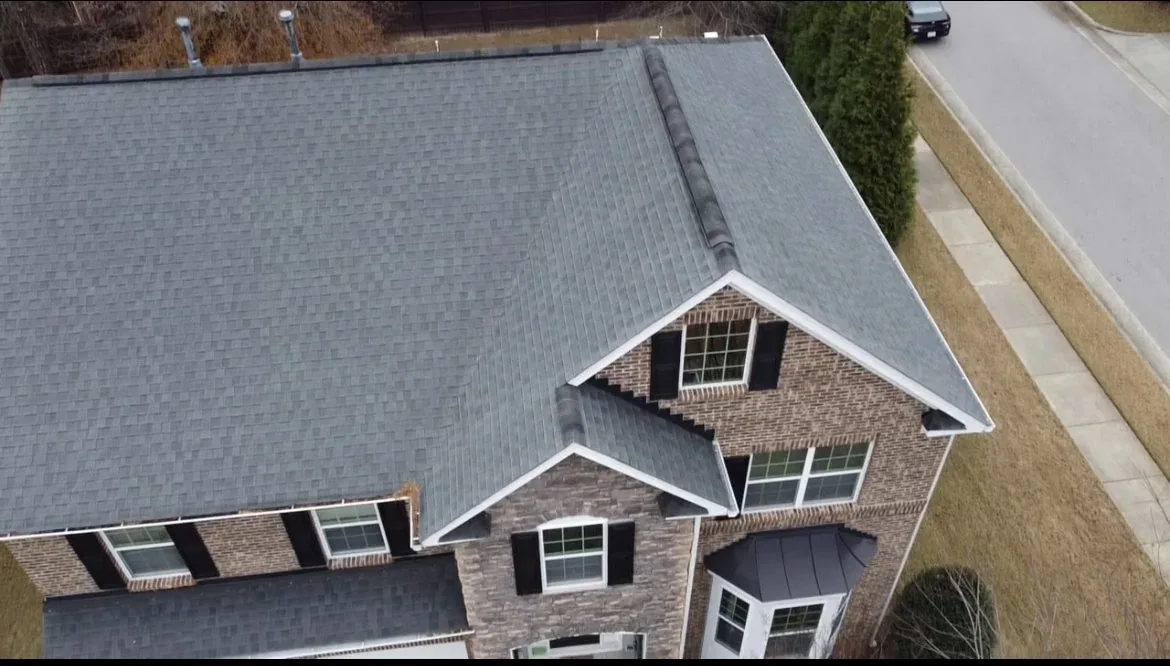
Granules are the sunscreen. Dark patches where the mat shows through mean that section is now aging quickly.
A handful of granules after a storm is normal on a new roof. On a fifteen year old roof it is the roof telling you something.
Curling or cupping corners mean the shingle is drying out and losing its grip. Wind finds those edges first.
A ridge that dips or waves is a decking problem, not a shingle problem, and it does not wait.
Check your closing paperwork or ask a neighbor who built at the same time. Age plus condition is the whole picture.
Rather have a number? The roof life calculator estimates what is left from your material, install year and exposure.
If the damage is confined to one area and the rest of the roof still has granules and flat edges, repair it. A repair on a sound roof is money well spent.
Replace when the wear is everywhere rather than in one place, when you are past about 80% of expected life, or when you are paying for a second repair in the same few years. At that point repairs are rent on a roof you will replace anyway.
One caveat worth knowing: matching shingles on an older roof is difficult. Colors drift between production runs and discontinue entirely. A repair on a fifteen year old roof will often be visible, which is a fair reason to replace a slope rather than patch it.
Our cost guide has the ranges by home size.

An architectural asphalt roof here usually runs 20 to 25 years, a few years short of its rating. Heat, humidity and summer storms all age shingles faster than a mild climate does.
Yes, and it is often obvious once you look. The slope facing the sun takes the most UV and frequently fails years before the shaded side.
Ventilation and gutters do most of the work. A hot attic cooks shingles from beneath, and blocked gutters back water up under the shingles at the edge. Both are cheap to fix next to a roof.
Not automatically. Age is one input. What matters is granule loss, curling edges, cracked seals around penetrations and whether the decking still feels solid underfoot.
It is the right way. Laying over hides the decking so nothing rotten gets found, traps heat that shortens shingle life, and makes the next replacement more expensive.
No. Insurance covers sudden damage such as wind or hail, not age. This is why documenting a storm promptly matters, because once a roof is simply old the claim is gone.
Asphalt shingle roofs in North Carolina are usually replaced every 20 to 25 years, sooner on a south facing slope with no shade. Metal runs 40 to 70 years. The honest answer for your roof comes from an inspection, not the calendar, so book the free one before you budget.
Sun and shade decide how long paint lasts as well as shingles. Each town has its own page.
We get on the roof, photograph what is actually there, and hand you a written report with a price. No charge, and no obligation to book the work with us. If the roof has years left in it, that is what the report will say.
Whether you need a roof replacement, roof repair, or annual inspection, we’ve got you covered.