
Labor is most of the bill
NerdWallet puts labor at up to two thirds of a metal job. Standing seam is slower to set out and less forgiving of a crew learning on your house, which is where the premium actually lives.
A standing seam metal roof costs $20,000 to $32,000 on a 2,000 square foot roof in the Triangle. An architectural shingle roof costs $10,000 to $16,000. Metal lasts 40 to 70 years here, shingles 20 to 25. Over 40 years you buy one metal roof or two shingle roofs.

Installed prices with the old roof torn off, on a 2,000 square foot roof area.
| 2,000 sq ft roof | Architectural shingles | Exposed fastener metal | Standing seam steel |
|---|---|---|---|
| Installed cost | $10,000 – $16,000 | $14,000 – $24,000 | $20,000 – $32,000 |
| Per square foot | $5 – $8 | $7 – $12 | $10 – $16 |
| Realistic life here | 20 to 25 years | 20 to 40 years | 40 to 70 years |
| Roofs bought in 40 years | Two | One or two | One |
| Recouped at resale, South Atlantic | 69.9% | 56.5% | 56.5% |
| Hail and wind | Weakest | Good | Best |
Cost ranges combine Angi’s Raleigh figures, HomeAdvisor and Western States Metal Roofing. Lifespans from InterNACHI and a Galvalume service life study. Resale from Zonda’s 2025 Cost vs Value report.
Everything else in this guide is decoration on that one sentence. Metal costs about double and lasts about triple, so the question is not which roof is better, it is how long you plan to stand under it.
We install both. That is worth saying out loud, because most articles on this topic are written by someone who sells exactly one of them, and it shows around paragraph four. We are GAF Certified and family owned, more than 150 Triangle households have left us a five star review, and precisely none of them mentioned our charts.
Our full metal roof cost guide breaks the metal side down by panel type. This page puts the two materials next to each other and lets them fight it out.
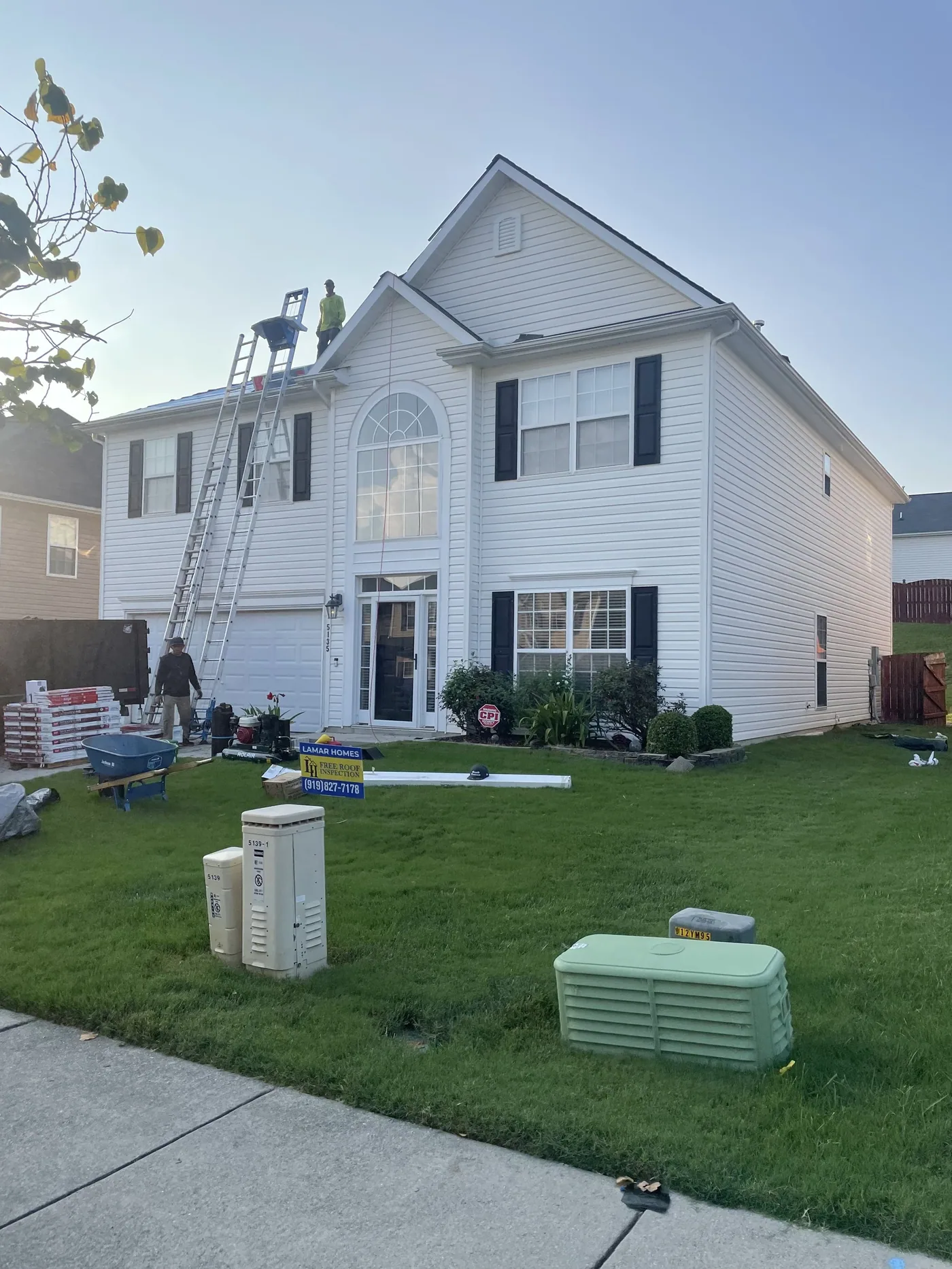
Four things move the number, and only one of them is the metal itself.
NerdWallet puts labor at up to two thirds of a metal job. Standing seam is slower to set out and less forgiving of a crew learning on your house, which is where the premium actually lives.
Stripping the old roof runs $1 to $3 per square foot whichever material replaces it. It is the one line on the quote that genuinely does not care what you pick.
North Carolina's code allows a standing seam system carrying its own load to go over one existing layer. That quietly deletes a few thousand dollars, which is the only time this guide gets to deliver good news about metal pricing.
Valleys, dormers, skylights and hips all mean cut panels and custom flashing. A simple gable roof narrows the gap; a roof that looks like a crossword puzzle widens it considerably.
Roofers argue about 24 versus 26 gauge the way other people argue about sports. Thicker steel and a Kynar 500 finish cost more and are worth it.
Steel pricing has been genuinely volatile, and tariffs keep touching it. Asphalt moves too, just less dramatically. Neither of us controls this.
InterNACHI’s chart lists metal at 40 to 50 years and architectural asphalt at 30. A field study of Galvalume standing seam measured 60 years of service life, which is longer than most people stay married to a house.
Triangle asphalt does not reach the chart number. Our summers cook shingles and our humidity keeps them damp in the shade, so 20 to 25 years is what we actually pull off roofs here. The 30 year figure describes a roof living somewhere gentler than North Carolina.
Exposed fastener metal is the asterisk. The panels outlive the screws, and the neoprene washers want replacing somewhere around year 20. Skip that and you own a 40 year roof with a 20 year leak schedule, which is a worse deal than shingles and costs more to arrive at.

The honest version, including the parts that cost us the bigger sale.
Two to three times the service life, and the gap widens in our climate rather than narrowing. This is the whole case for metal and it is a strong one.
Standing seam carries a 140 mph wind rating and shrugs off hail that ends a shingle roof. Wake County logged 69 hail events between 2020 and 2025, so this is not a hypothetical.
A Florida study measured attics running 23 percent cooler under white metal, and the Department of Energy puts reflective roofing at 5 to 20 percent off cooling costs.
Half the price, and that is not a small thing. Money you keep today is worth more than money you theoretically save in 2061, and anyone who tells you otherwise is selling something.
Zonda has asphalt recouping 69.9 percent against metal's 56.5 in the South Atlantic. Buyers pay for a roof that is new, not for a roof that is clever.
A shingle repair is a trip to a supplier and an afternoon. A standing seam repair means matching panels, matching the finish, and sometimes a crew who has seen that profile before.
Midpoints from the table above, ignoring inflation and financing, because this is a roofing guide and not a mortgage.
| Over 40 years | Architectural shingles | Standing seam steel |
|---|---|---|
| Roofs you buy | Two | One |
| Cost, midpoint each | $13,000 × 2 | $26,000 × 1 |
| Total on roofs | $26,000 | $26,000 |
| Tear-offs paid for | Two | One |
| Weeks of your life spent on this | Two | One |
It comes out level, which is the least satisfying answer in roofing and also the true one. Metal pulls ahead past year 40, on insurance, and on cooling. Shingles pull ahead if you move, if rates change, or if you would rather have the difference now.
North Carolina has managed 79 mph gusts through Raleigh from a storm that had already crossed half the state to get here. Hurricanes arrive inland tired but not harmless, and that is before the hail.
Shingles lose granules to hail long before they lose shingles. The damage is invisible from the ground and it quietly halves the roof's remaining life, which is why we photograph the granule loss rather than asking you to take our word for it. Metal dents instead, which is ugly and not structural, and homeowners find that distinction much less comforting than we do.
Wind is where the gap is widest. A shingle roof fails at its weakest tab; a standing seam roof has no tabs to find. Under our pines, both materials also collect needles in the valleys, and both will happily rot the decking underneath if nobody ever goes up there.
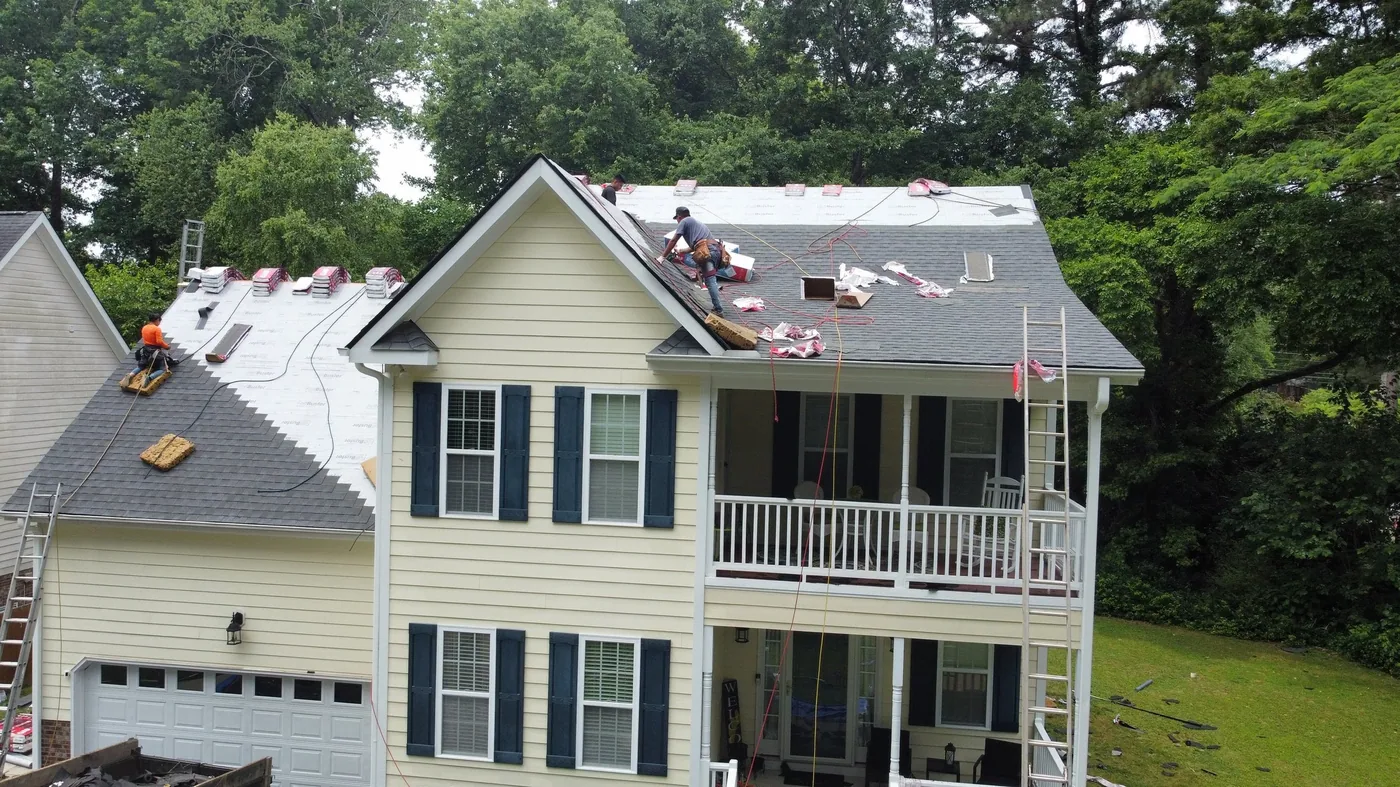
One is usually better than expected. The other is usually worse.
Carriers care about impact and wind rating. North Carolina publishes mitigation credits for qualifying roofs, and a new roof of either material can move a North Carolina premium. Ask your carrier for their number before you budget around it.
56.5 percent recouped for metal against 69.9 for asphalt in the South Atlantic. A metal roof is something you buy for yourself, not for the next owner, and the listing photo does not know the difference.
Adjusters have a settled method for granule loss and lifted tabs. Metal damage is more often argued about, because a dent is cosmetic until somebody decides it is not.
A 50 year material warranty covers the material. It does not cover the installer, the flashing, or the valley that was cut short on a Friday, which is where roofs actually fail.
The noise objection comes up every single time, and it comes from a real memory of a real barn. Over a solid deck with underlayment, rain on metal measures about 52 decibels against 46 on shingles, the gap between a quiet library and a quiet office. The barn had panels screwed to open purlins with nothing underneath. Your house is not a barn, no matter what the neighbors say about the color.
Lightning is the other one. Metal does not attract it, and if lightning does strike, a conductive non-combustible roof is the one you want, not the one made of asphalt. This is the rare case where the scary-sounding material is the safer choice.
Walking on it is a fair concern rather than a myth. Standing seam panels dent under a careless boot, which is one more reason the gutter cleaner should know what is up there. Our gutter cleaning crew does.

Four houses, four answers. Yours is probably one of them.
The most common metal roof we install in Raleigh is not a whole roof. It is standing seam over a porch, a bay or a front gable with shingles on the main roof, the look half the new builds in Wake County are wearing. A fraction of the price, most of the compliments.
Simple roofline, twenty year horizon, and a storm conversation with your insurer you would rather not repeat. That house earns a full metal roof, and it is the one case where we push.
Architectural shingles, and we will say so even though the other quote is bigger. A metal roof you enjoy for four years is an expensive way to improve somebody else's listing photo.
When we quote metal, the shingle number sits beside it on the same page, same measurements, same tear-off. Half the time the shingle number wins. We have made peace with this.
It depends how long you are staying. Metal costs roughly twice as much and lasts two to three times as long, so a house you keep for thirty years earns the premium back by skipping the second roof. A house you sell in five years does not.
InterNACHI puts metal at 40 to 50 years against 30 for architectural asphalt, and a field study of Galvalume standing seam measured 60. Triangle shingle roofs realistically manage 20 to 25.
About double. On a 2,000 square foot roof here, architectural shingles run $10,000 to $16,000 installed and standing seam steel runs $20,000 to $32,000.
North Carolina's code allows a standing seam system that carries its own load to go over one existing layer, which saves the tear-off. Two layers means everything comes off.
Over a solid deck with underlayment, rain on metal measures about 52 decibels against 46 on shingles. The loud metal roof people remember is a barn panel over open purlins.
Less than owners expect. Zonda's 2025 report has metal recouping 56.5 percent in the South Atlantic against 69.9 percent for asphalt. Buyers pay for new, not for metal.
And more. Don’t see your city? Call (984) 224-7182.
We get on the roof, photograph what is actually there, and hand you a written report with a price. No charge, and no obligation to book the work with us. If the roof has years left in it, that is what the report will say.
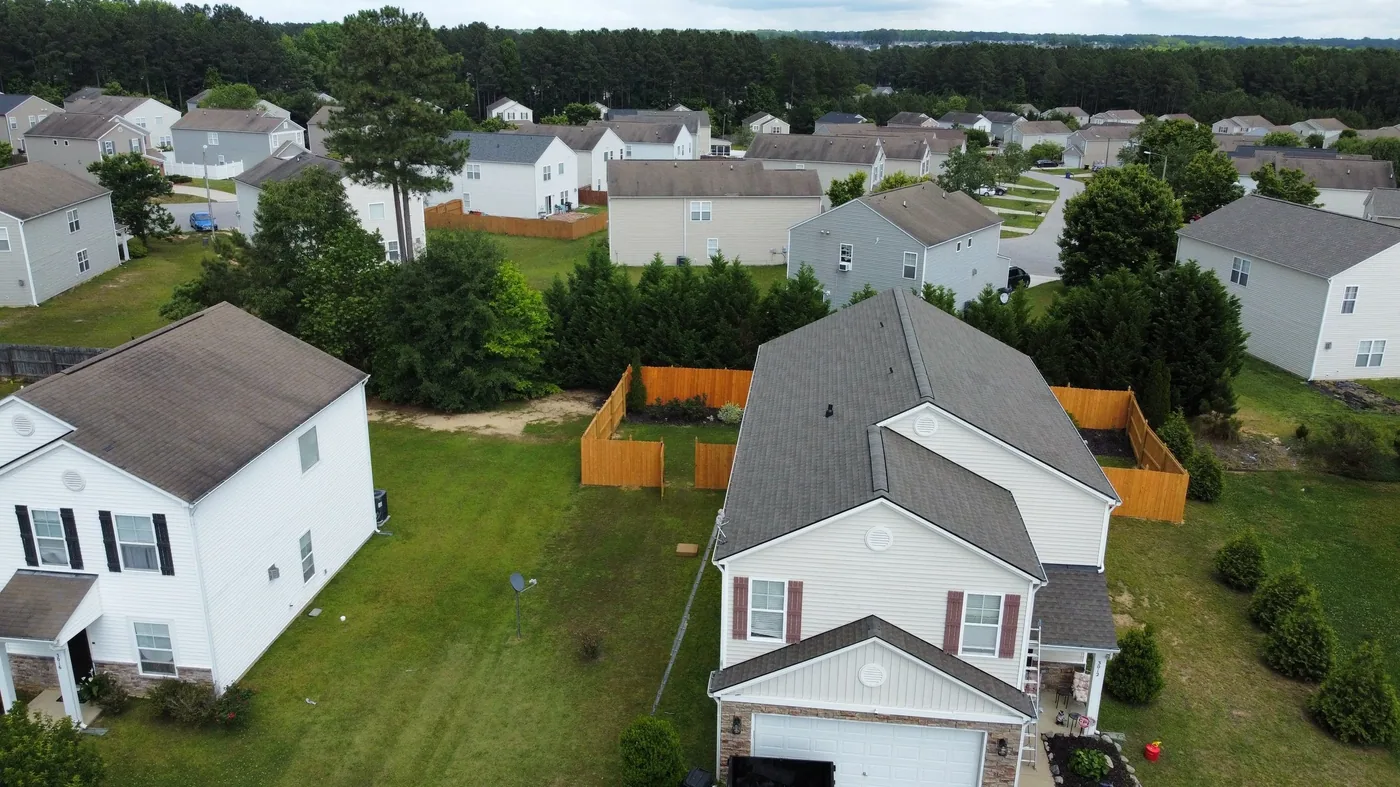
Whether you need a roof replacement, roof repair, or annual inspection, we’ve got you covered.