
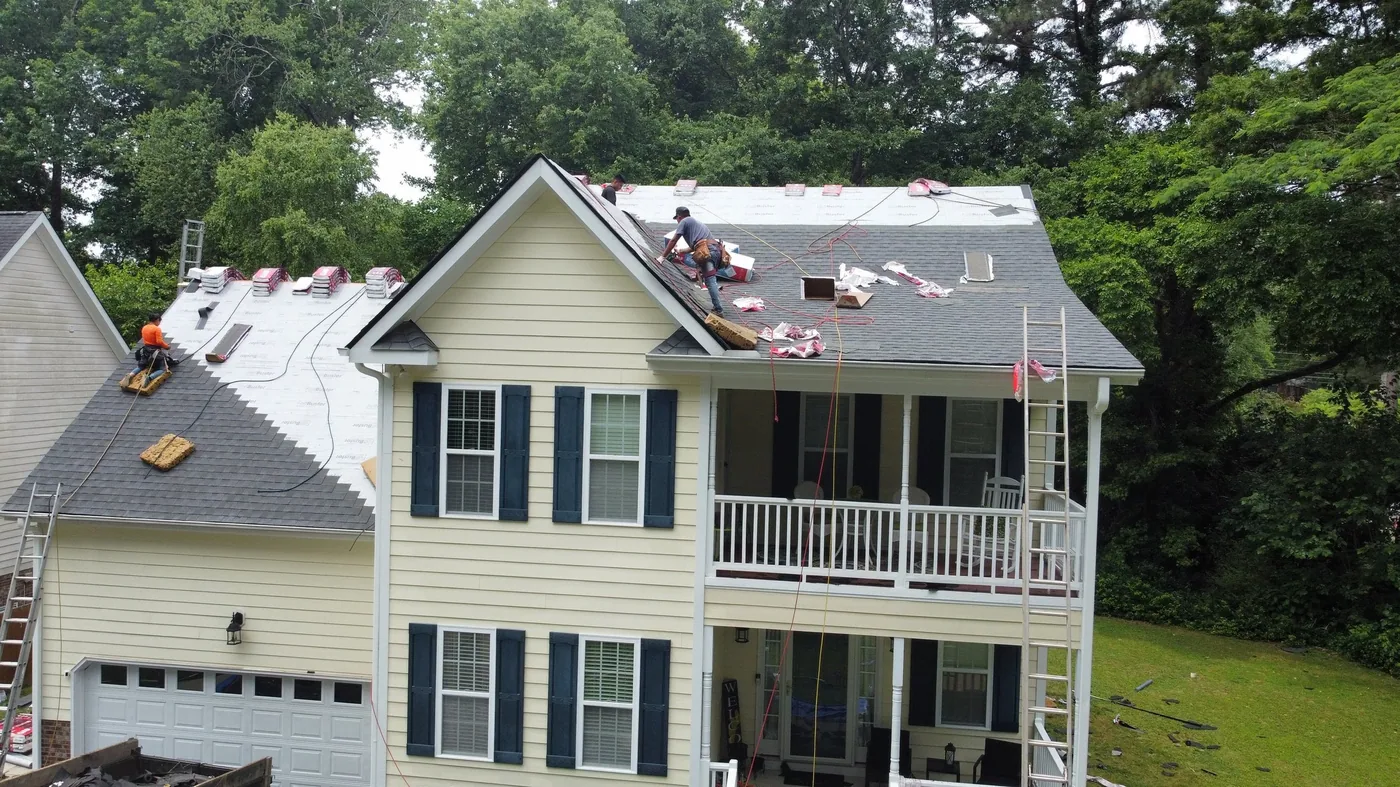
Tear-off
Removing the old roof runs $1 to $3 per square foot, which on a normal house is a couple of thousand dollars of somebody else’s Saturday.
A standing seam steel roof costs $10 to $16 per square foot installed in the Raleigh area, so $20,000 to $32,000 on a 2,000 square foot roof. Exposed fastener panels run $7 to $12, copper $20 to $40. That is two to three times an asphalt roof, for a roof that lasts two to three times as long.

| Metal roof type | Installed, per sq ft | 2,000 sq ft roof | Lasts about |
|---|---|---|---|
| Exposed fastener (screw down) | $7 – $12 | $14,000 – $24,000 | 20 to 40 years |
| Standing seam, steel | $10 – $16 | $20,000 – $32,000 | 40 to 70 years |
| Metal shingles / stone coated | $7 – $14 | $14,000 – $28,000 | 40 to 50 years |
| Standing seam, aluminum | $11 – $18 | $22,000 – $36,000 | 50+ years |
| Copper or zinc | $20 – $40 | $40,000 – $80,000 | 70 to 100 years |
| Architectural asphalt, for comparison | $5 – $8 | $10,000 – $16,000 | 20 to 25 years |
Installed prices with the old roof torn off. Ranges combine Angi’s Raleigh figures, HomeAdvisor, HomeGuide and the Triangle roofers who publish prices. Lifespans from InterNACHI and the Metal Construction Association service life study. Planning ranges, not quotes.
I promised my editor I would write this guide without once saying “it depends.” [Checks notes.] It depends. But it depends on about four things, and every one of them is in the table above.
We are GAF Certified, family owned, and we install both metal and shingle roofs across the Triangle, which means we have no dog in the fight beyond wanting you to pick the right one. More than 150 households have left us a five star review, and not one of them was for my metaphors.
The number that matters most is the one in the second column. Roofers price per square foot of roof surface, and a roof is bigger than the house it sits on, because it slopes. (Yes, I also had to think about that one.) A 2,000 square foot house with a normal pitch has about 2,300 square feet of roof, and our roofing square guide shows how to work out yours.

The panels are the cheap part. The person holding the panels is not.
Labor is about 60 percent of a metal roof bill. HomeAdvisor puts it at 60 percent on average and NerdWallet says up to two thirds, which is the point where I stopped feeling bad about my own hourly rate. Standing seam panels are cut to length for your roof, folded on site, and locked together by hand, and none of that goes faster because you asked nicely.
| Where a $26,000 standing seam quote goes | Share | About |
|---|---|---|
| Labor: measuring, cutting, folding, seaming, flashing | 55 – 65% | $14,000 – $17,000 |
| Panels, clips and fasteners | 20 – 30% | $5,000 – $8,000 |
| Underlayment, trim, ridge, flashing metal | 5 – 10% | $1,500 – $2,500 |
| Tear-off and disposal | 5 – 8% | $1,500 – $2,000 |
| Permit, if required | under 1% | $125 – $130 |
A 2,000 square foot standing seam job, split the way HomeAdvisor and Western States Metal Roofing report it. Your quote will not itemize it this neatly, and you should ask why.
Removing the old roof runs $1 to $3 per square foot, which on a normal house is a couple of thousand dollars of somebody else’s Saturday.
Required in North Carolina once a re-roof passes $40,000 or touches the structure. Inside Raleigh city limits it is about $125 to $130, the cheapest line on the quote by a mile.
Dormers, valleys and a chimney clearly added by someone who hated roofers can add as much as 50 percent to the labor line. Every cut is a fold, and every fold is a person.
Underlayment, ridge caps, trim and flashing add a few hundred dollars each. They are the parts a bad crew skimps on, because you cannot see them from the driveway. You will meet them again in about eight years. [Stage direction: ominous music.]
Standing seam is the metal roof most Triangle homeowners mean when they say “metal roof,” and it is the one we recommend on a house you intend to keep. Vertical panels, hidden clips, no screws through the face of the metal to back out in year twelve and start a very slow leak.
The Raleigh price is settled to a degree that surprised me. Three local roofers who publish numbers all land at $10 to $16 per square foot installed, Angi’s Raleigh page (updated July 2026) shows an average metal job of $16,358, and HomeAdvisor’s standing seam table gives $15,000 to $24,000 for 1,500 square feet, $18,000 to $32,000 for 2,000, and $25,000 to $40,000 for 2,500. When four sources agree I stop arguing, and it depends less than I said. [My editor, off camera: “That is twice.”]
Thicker, so it holds its shape in hail and does not oil-can in the sun. It added roughly 9 percent to one homeowner’s $51,000 quote. On a house, pay it. On a shed, the shed does not care.
Sold as Kynar, it carries a 40 year fade warranty where SMP chalks in a decade of Carolina sun. Dark color, pay for the PVDF; white roof, argue with me.
Steel is the answer for nine houses in ten. Here is what the other one pays.
| Metal | Panel cost, per sq ft | Installed, per sq ft | The trade-off |
|---|---|---|---|
| Galvalume steel, 24 gauge, PVDF paint | $2.60 – $5.00 | $10 – $16 | The default. Strong, cheap, fade resistant. |
| Galvalume steel, 26 gauge, SMP paint | $1.50 – $2.00 | $7 – $12 | Thinner and cheaper. Fine on a shed, dents on a house. |
| Aluminum | $3.50 – $6.50 | $11 – $18 | Never rusts. Softer, so hail marks it. |
| Zinc | $13 – $25 | $20 – $35 | Heals its own scratches. Priced like it knows. |
| Copper | $13 – $25 | $20 – $40 | A hundred years and a green patina. Also a theft target. |
Panel prices from Western States Metal Roofing (January 2026). Installed ranges from HomeGuide and Angi. Labor is the same job whichever metal you pick, which is why the gap between panel price and installed price is so wide.
Read the panel column and the installed column together and you will spot the trick. Panels for a whole standing seam roof might be $4 a square foot; the finished roof is $13. The rest is labor, trim, underlayment and the crew’s coffee, and I put coffee last only because I am scared of them.
Zinc and copper are for a house you are handing to your grandchildren, or a porch roof you want the neighbors to talk about. Aluminum earns its premium within a mile or so of salt water, which describes none of Raleigh, so around here it mostly buys you a roof that will never rust and will dent in the first real hailstorm. Steel it is.
Sometimes. [My editor has left the building.] The honest arithmetic is in the five cards below, every number linked so you can check me, because I would.
The short version: on a house you keep for 30 years, metal skips an entire second roof and that is the whole argument. On a house you sell in five, the metal premium is mostly a gift to the next owner, who will not send a card.
InterNACHI’s chart lists metal at 40 to 50 years and architectural asphalt at 30, and a field study measured Galvalume standing seam at 60 years. Triangle asphalt manages 20 to 25 in practice. Two shingle roofs, or one metal one.
The Department of Energy puts a cool color roof at 5 to 20 percent off cooling costs; a Florida test measured 23 percent under white metal. Raleigh cools for fewer months than Fort Myers and heats in January, so plan on the low end. A dark bare panel is not a cool roof, whatever the salesman’s shirt says.
North Carolina only mandates roof credits in coastal territories. In Wake County a discount is carrier by carrier, needs a UL 2218 Class 4 rated panel and the paperwork, and typically runs 5 to 15 percent of the wind and hail portion. This is where I disappoint people at parties.
Zonda’s 2025 Cost vs Value report has metal recouping 56.5 percent at resale in the South Atlantic against 69.9 percent for asphalt. A new roof sells a house. A new metal roof sells the same house, at roughly the same price, to a buyer who is quietly thrilled.
Wake County logged 69 hail events from 2020 to 2025 and Hurricane Fran pushed 79 mph gusts through Raleigh. Standing seam carries a 140 mph rating and shrugs off hail that ends a shingle roof. Our storm damage page covers the other outcome.
Exposed fastener roofs need their screws and washers checked, because the rubber cracks after 10 to 15 years in a hot climate. Standing seam hides the fasteners, so the maintenance plan is a ladder, once, to admire it.
The question everyone actually typed.
A standing seam roof costs two to three times what an architectural shingle roof costs on the same house, $20,000 to $32,000 against $10,000 to $16,000 for 2,000 square feet in the Triangle, and then lasts two to three times as long. Over 40 years the shingle house buys two roofs and the metal house buys one, which is why the lifetime math usually favors metal and the five year math never does. (Nobody has ever asked me about the twenty year math. It is close, and boring.) The full comparison, including which one your insurer, your attic and your neighbor’s pine tree prefer, is in our full metal roof vs shingles comparison, and our roof lifespan guide has the material by material numbers.
$20,000 to $32,000 for standing seam against $10,000 to $16,000 for architectural shingles on a 2,000 square foot roof. Roughly double, occasionally triple.
40 to 70 years against 20 to 25 in Triangle conditions. Over 40 years the shingle house buys two roofs and the metal house buys one.
Metal recoups 56.5 percent at resale in the South Atlantic against 69.9 percent for asphalt. Buyers pay for new, not for metal.
The most common metal roof we install in Raleigh is not a whole roof, it is a standing seam accent over a porch, a bay or a front gable, paired with a shingle main roof, the look half the new builds in Wake County have. It costs a fraction of a full metal roof and I have never heard a homeowner regret it [the gutter color, yes, but that is a different guide].
The second most common job is a repair on somebody else’s exposed fastener roof. The screws back out, the rubber washers under them crack after 10 to 15 years in a hot climate, and the roof that was sold as maintenance free starts leaking at every screw at once, like a colander with ambition. Standing seam has no screws through the face, which is the whole reason it costs more and the whole reason we push it.
When we quote metal, the shingle roof sits next to it on the same page, same measurements, same tear-off, and half the time the shingle number wins. The free inspection is free either way and the report is yours whatever you decide. It depends, one last time, on you. [Editor, from the parking lot: “Three.”]
Where the number is heading, and the one line on the quote that can pull it back.
Import duties on steel and aluminum doubled to 50 percent on 4 June 2025, and Roofing Contractor magazine tracked spot panel prices jumping as much as 60 percent that spring. Installed prices moved far less, because panels are a third of the bill, but manufacturers added 3 to 5 percent again in August 2026. The direction is up, and so, reading that, was my eyebrow.
Every valley, dormer and chimney is a place panels get cut and trim gets folded by hand. A plain gable roof and a cut-up roof of the same square footage can be thousands of dollars apart, which is why nobody serious quotes from a satellite photo.
North Carolina’s residential code allows a standing seam system that carries its own load to go over one existing layer, which saves the $1 to $3 per square foot of tear-off. We only do it over decking we have checked, because the metal will outlive whatever is hiding underneath it.
Installed in the Raleigh area: $7 to $12 per square foot for exposed fastener panels, $10 to $16 for standing seam steel, $20 to $40 for copper or zinc. Architectural asphalt runs $5 to $8. All per square foot of roof surface, old roof torn off.
Standing seam steel on a 2,000 square foot roof is $20,000 to $32,000 installed in the Triangle; exposed fastener panels $14,000 to $24,000. Figure $15,000 to $24,000 for 1,500 square feet and $25,000 to $40,000 for 2,500.
Sometimes. North Carolina's code allows a standing seam system that carries its own load over one layer of shingles, saving $1,000 to $5,000 in tear-off. We check the decking first; two existing layers means the shingles come off.
Over a solid deck with underlayment, rain on metal measures about 52 decibels against 46 on shingles, the gap between a quiet library and a quiet office. The barn-roof drumming comes from panels over open framing.
Only when the panel carries a UL 2218 Class 4 impact rating and you send the paperwork. Class 4 discounts in North Carolina run about 5 to 15 percent of the wind and hail portion, carrier by carrier. Mandated credits apply to coastal territories only.
And more. Don’t see your city? Call (984) 224-7182.
Metal and shingle are quoted side by side in every town we cover. Each has its own page with its permit office and weather.
We get on the roof, photograph what is actually there, and hand you a written report with a price. No charge, and no obligation to book the work with us. If the roof has years left in it, that is what the report will say.
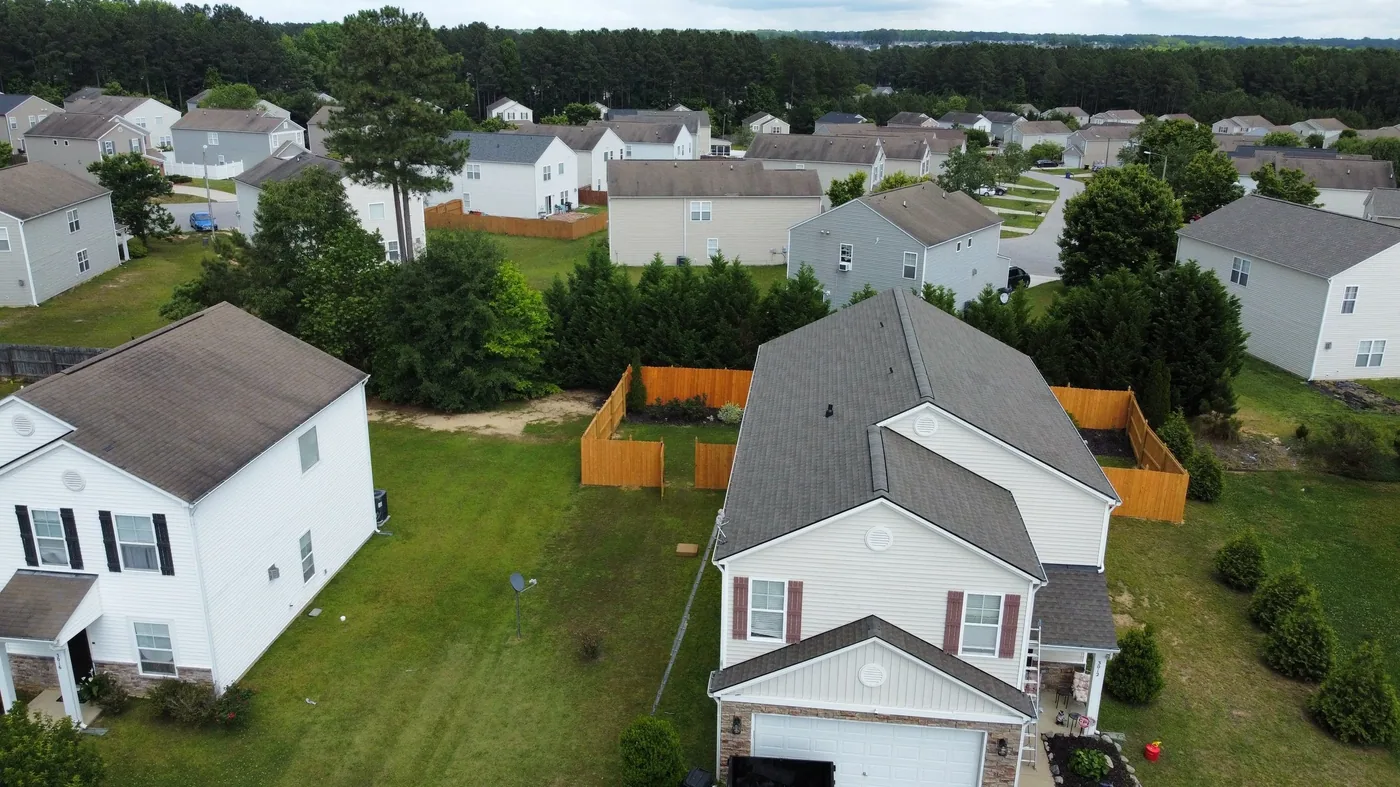
Whether you need a roof replacement, roof repair, or annual inspection, we’ve got you covered.