
Veteran Discounts Available
Home
Recent Projects
Contact
Schedule Appointment Call (984) 224-7182
Guide

Ridge Vent vs Box Vent: Which Roof Exhaust Wins?

Both vent the top of the attic. One does it through a single slot along the peak, the other through a row of separate holes. Here is how they compare on cost, airflow and leaks, plus the ridge vent vs turbine question.

The table

Ridge vent vs box vent, side by side

The two vents do the same job, exhaust at the top of the roof. They do it in very different ways.

Ridge ventBox vent
Where it sitsContinuous, along the peak under the ridge capIndividual units, cut in near the top of the slope
Installed cost$7 to $15 per linear foot, $350 to $600 total$40 to $200 per vent
Net free area18 sq in per linear foot (GAF Cobra Rigid Vent 3)50 sq in per vent (Lomanco 750); 30 to 70 sq in across the 700 Series
Holes in the roofOne slot along the ridgeOne per vent
Looks from the streetNearly invisible under the capA row of boxes near the top
Best fitAny roof with enough ridgeHip roofs and roofs broken up by dormers with little usable ridge

Installed costs from HomeGuide’s roof vent cost guide, which also notes a $150 to $300 minimum service fee from most roofers. Net free area: GAF’s published spec for Cobra Rigid Vent 3 and Lomanco’s 700 Series box vents.

The math

How many box vents equal one ridge vent?

Ventilation is sized in net free area, not in number of vents. That is where the comparison actually gets decided.

Take a 1,500 square foot attic. At the 1/300 ratio, the attic needs 5 square feet of total ventilation, split half intake and half exhaust. That is 2.5 square feet, or 360 square inches, of exhaust. Lomanco’s own worked example uses exactly these numbers.

With Lomanco 750 box vents at 50 square inches each, that is 7.2 vents, so 8 holes in the roof. With a ridge vent at 18 square inches per foot, the same 360 square inches takes 20 feet of ridge. Most Triangle homes have that and more.

Where code asks for the stricter 1/150 ratio, double both answers: 16 box vents, or 40 feet of ridge. Run your own attic through our roof ventilation calculator.

Whichever exhaust you pick, it needs matching intake at the soffits. Exhaust without intake pulls air from the house below instead.

In detail

When each vent is the right call

We fit ridge vents on most reroofs. Box vents are the better answer on certain roofs, and turbines come up often enough to cover too.

Ridge vent, the default on any roof with enough ridge

$350 to $600 installed 18 sq in of net free area per foot (GAF Cobra Rigid Vent 3).

A continuous slot cut along the peak, covered by a vent and capped with ridge shingles. Hot air rises to the highest point of the attic, and a ridge vent exhausts along that whole line rather than at a few spots. No moving parts, one penetration and it is close to invisible from the ground.

On a reroof the ridge is already open, so adding or upgrading ridge venting is a small line on the estimate.

The catch. It only works with soffit intake under it, and it needs enough ridge length to deliver the area. A hip roof can run out of ridge before it runs out of attic.
Box vent, the answer where there is little usable ridge

$40 to $200 per vent installed 50 sq in per Lomanco 750.

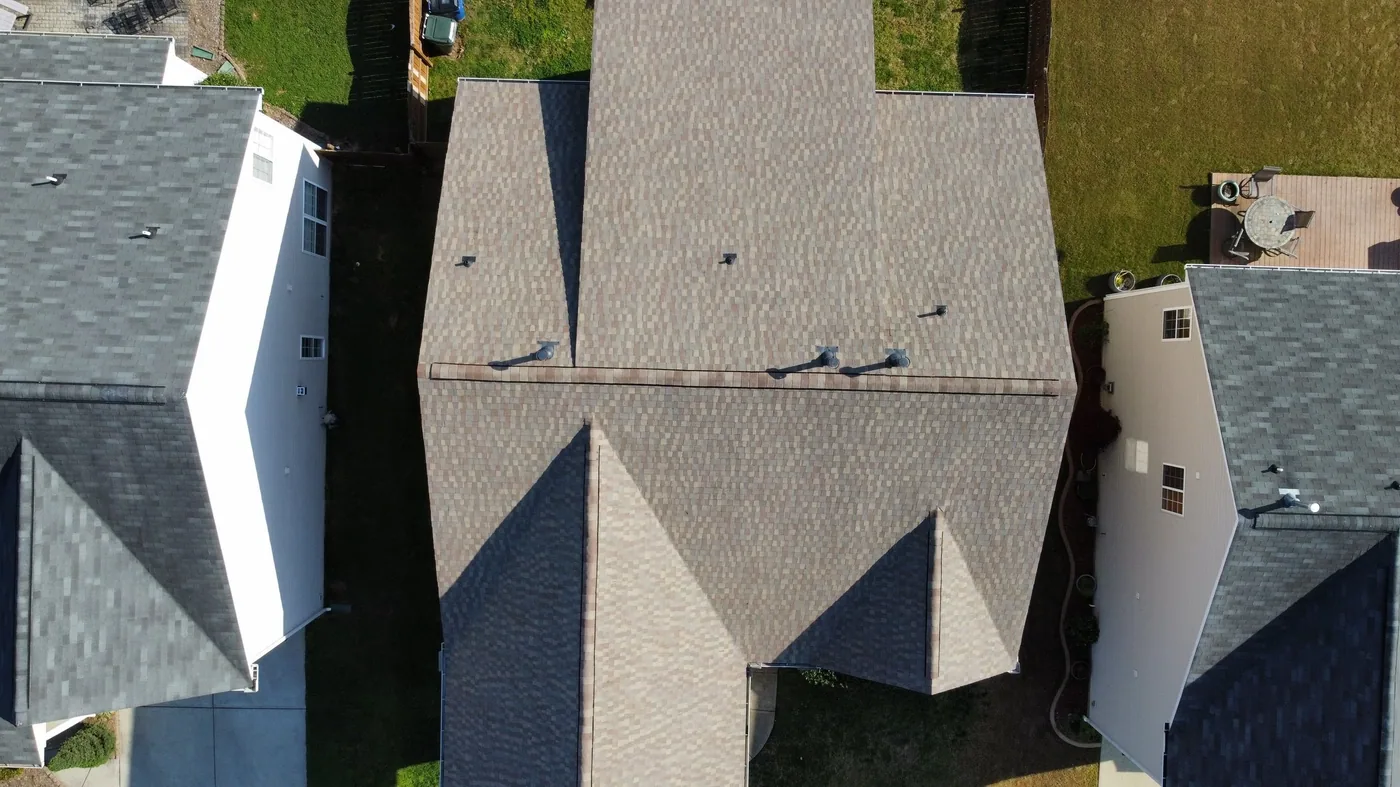
Also called static, louver or turtle vents. They sit just below the ridge and exhaust through a single opening each. On a hip roof, or a roof chopped into short runs by dormers and valleys, they are how you get the exhaust area the attic needs.

Each unit is cheap, and one can be added or replaced without touching the ridge.

The catch. You need several to match a ridge vent, and every one is another hole in the roof to flash and seal. Eight boxes is eight places for a leak to start.

Turbine vent, the ridge vent vs turbine question

$50 to $300 per vent installed Airflow depends on wind, not a static rating.

A spinning head that uses wind and rising heat to pull air out. HomeGuide notes turbines are most useful where winds average 5 miles per hour or more, and they move a lot of air when they spin.

They are common on older Triangle roofs and are cheap to replace like for like.

The catch. On a still, hot day they are just a box vent. The bearings wear and get noisy, and a seized turbine is a common find on an inspection.

The mistake

Do not mix ridge vents with box vents or gable vents

Two different exhaust types on one attic tend to fight. The ridge vent takes the easiest air available, which may be a box vent or a gable vent a few feet away rather than the soffits at the eaves. The air short-circuits across the top of the attic and the lower part stops moving.

When we install a ridge vent, the old box vents usually come out and the holes are decked over. Pick one exhaust strategy and pair it with soffit intake. Our roof vent types guide covers the full set, including gable vents and powered fans.

Not sure what your roof has? It is part of every free roof inspection we do, attic included.

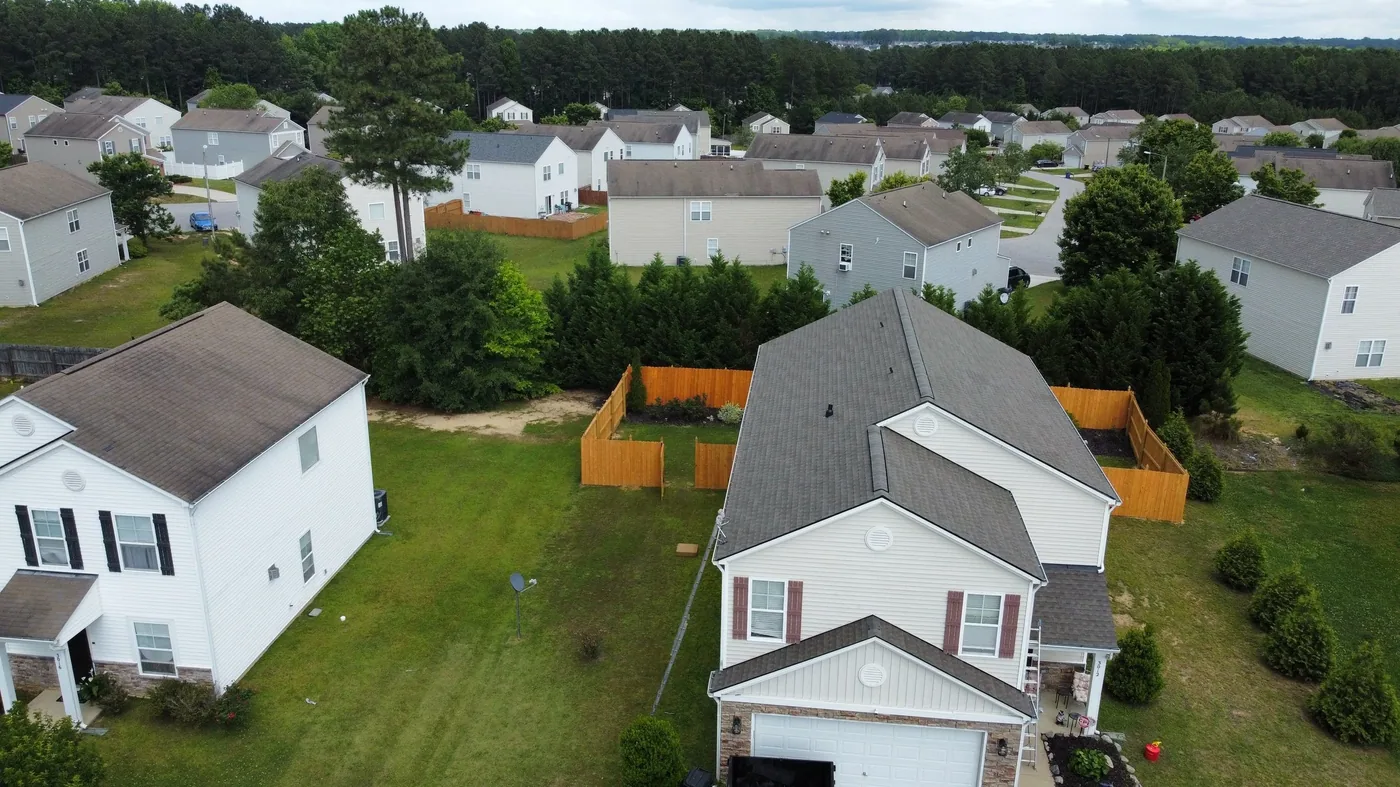
Ridge venting on a completed Lamar Homes roof
Questions

Ridge vent vs box vent questions

Is a ridge vent better than box vents?

On most roofs, yes. A ridge vent exhausts along the whole peak through one penetration, and 20 feet of GAF Cobra Rigid Vent 3 gives the same 360 square inches as eight Lomanco 750 box vents. Box vents are the better choice where the roof has little usable ridge, such as a hip roof.

How many box vents do I need?

Divide the exhaust area your attic needs by the net free area of the vent. A 1,500 square foot attic at the 1/300 ratio needs 360 square inches of exhaust, which is 8 Lomanco 750 vents at 50 square inches each. At the 1/150 ratio it is 16.

Can I have a ridge vent and box vents on the same roof?

It is not recommended. Two exhaust types short-circuit each other, so the ridge pulls air from the box vents instead of from the soffits and part of the attic stops ventilating. When we fit a ridge vent, the box vents normally come out.

Ridge vent vs turbine: which is better?

A ridge vent works all the time with no moving parts. A turbine moves more air when there is wind, HomeGuide says where winds average 5 mph or more, but on a still day it does little and the bearings wear out. For most homes we recommend ridge and soffit.

How much does it cost to switch from box vents to a ridge vent?

HomeGuide puts a ridge vent at $7 to $15 per linear foot, or $350 to $600 total, and most roofers charge a $150 to $300 minimum. Doing it during a reroof is cheapest, because the ridge is open and the old box vent holes can be decked over at the same time.

Do box vents leak?

Any penetration can leak if the flashing or seal fails, and box vents add one penetration per vent. Wind-driven rain and cracked plastic housings are the usual causes. A ridge vent has one long penetration protected by the ridge cap.

Keep reading

Related guides and calculators

Free on-site inspection

Get your roof ventilation checked, free

We get on the roof, photograph what is actually there, and hand you a written report with a price. No charge, and no obligation to book the work with us. If the roof has years left in it, that is what the report will say.

  • Free inspection, no obligation to buy
  • Personalized written estimate
  • Financing and insurance claim support
  • Residential and commercial properties

Give us a call or fill out our form today to schedule your free inspection!

Whether you need a roof replacement, roof repair, or annual inspection, we’ve got you covered.

Call Now Free Inspection