
Shingles: missing, cracked, curling
And creased, which is the wind one nobody spots. A creased tab has broken its seal and will lift again in the next storm, even though it is lying flat today.
Paid inspections run $150 to $500 depending on whether someone walks the roof, flies a drone over it or points a thermal camera at it. Ours is free, takes under an hour, and you keep the written report whether you hire us or not.

| Type of inspection | Published cost | Takes | What it is good for |
|---|---|---|---|
| Visual, from the ground | $150 – $200 | 30 – 45 min | Obvious damage only. Misses most of what matters. |
| Visual, walking the roof | $200 – $300 | 45 – 60 min | The real one. Flashing, boots, valleys, decking underfoot. |
| Drone | $200 – $400 | 30 – 45 min | Roofs too steep or fragile to walk. Cannot lift a shingle. |
| Infrared or thermal | $300 – $500 | 60 – 90 min | Trapped moisture in a flat or commercial roof. |
| Lamar Homes, walking the roof | Free | Under an hour | Photographs, measurements and a written report you keep. |
National 2026 ranges from SquareDash's inspection cost guide. Our inspection is free and carries no obligation.
The reasonable suspicion about a free inspection is that it is a sales visit wearing a clipboard. Sometimes it is. [The tell is a roofer who finds catastrophic damage in four minutes and has a contract in the van. We have all met him.]
Ours is free because a roof we have photographed is a roof we can quote accurately, and because a homeowner who gets told their roof has eight years left tends to call us when it does not. You keep the report either way, and if the roof is fine the report says so.
What you get: a GAF Certified inspector on the roof, photographs of everything found, measurements, and a written report you can hand to an insurance adjuster. Our roof inspection page covers the visit itself.
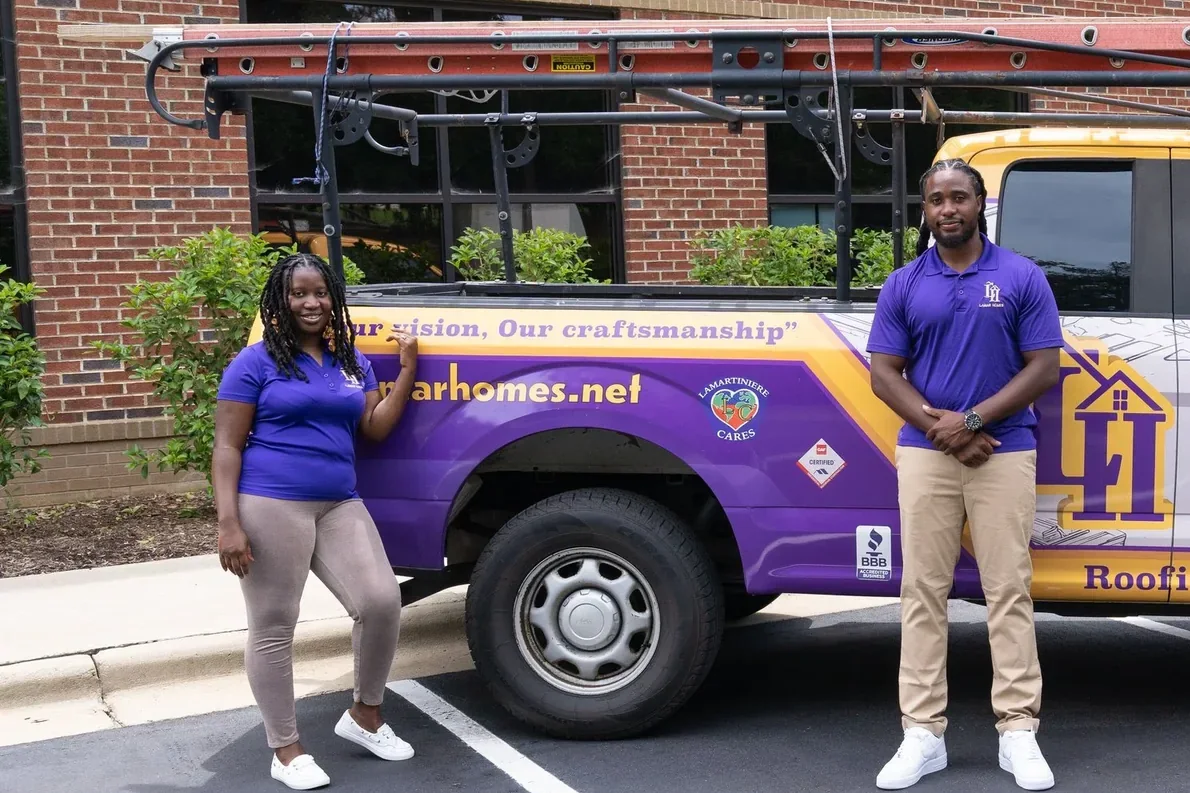
The published checklists and ours agree on most of this. None of it is visible from your driveway.
And creased, which is the wind one nobody spots. A creased tab has broken its seal and will lift again in the next storm, even though it is lying flat today.
Where most leaks actually start. We are looking for metal that has pulled out of a mortar joint or been caulked over instead of replaced.
You can feel soft decking through your boots before you can see it. This is the main thing a drone cannot do and the main reason we still walk roofs.
The quiet one. Granule loss after hail halves a roof's remaining life while the roof still looks fine from the ground, and the gutters are where the evidence collects.
Debris packed in a valley, a vent boot cracked by fifteen summers, a satellite bracket someone screwed straight through the shingles in 2011.
Where we can get into the attic, the underside of the decking tells the truth faster than the top does: old stains, rusty nails, damp insulation.
The published guidance is once a year past ten years old, twice a year past twenty, and after any major storm. The first two are sensible. The third is the one that matters in the Triangle.
Wake County logged 69 hail events between 2020 and 2025, and InterNACHI puts architectural asphalt at 30 years in general, which our summers do not respect. A roof here gets asked more of than the chart assumes, and hail damage is invisible from the ground by design.
The other trigger is a sale. A roof with years left and a report to prove it is worth money in a negotiation, and a roof with a problem is worth knowing about before a buyer's inspector finds it for you.
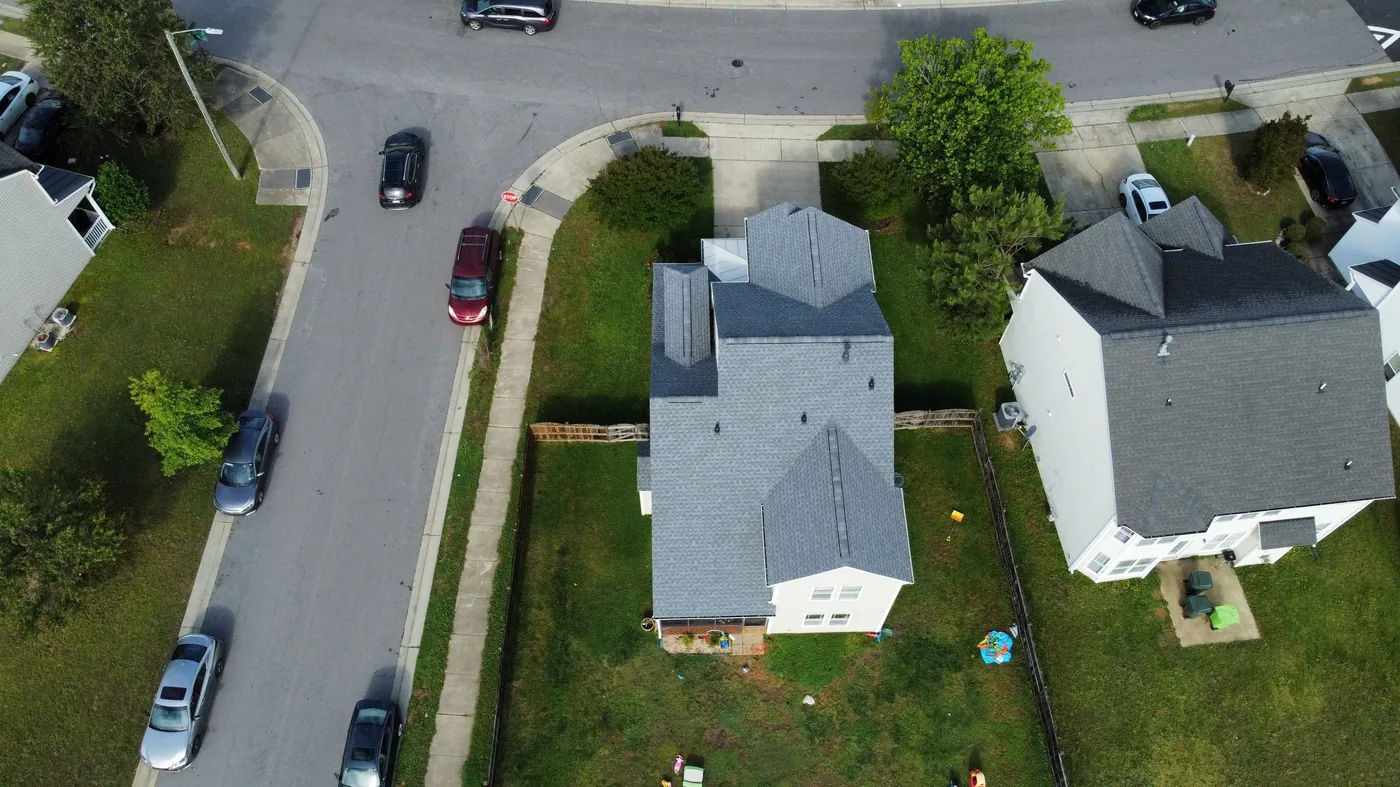
There are only three, and one of them is the most common.
The most common outcome on a roof under fifteen. The report says so, you keep it, and we leave. This is not us failing to sell you something; it is the product working.
A boot, a length of flashing, a valley cleared and re-sealed. Repairs start at $625, and the leak repair cost guide breaks the ranges down by cause.
Quoted beside the repair where both are possible, so you can see the two numbers. The replacement cost guide has the ranges by house size.
If the damage is storm damage, the report is the evidence. We file it and meet the adjuster on the roof with you; the insurance claims page explains the process.
Paid inspections run $150 to $500 nationally depending on type. Ours is free, including the report, and it stays free whether or not you hire us.
A paid inspection is usually bought by someone with no stake in the outcome, such as a home inspector before a sale. A free one comes from a roofer who hopes to do the work. Both are useful; the honest test is whether you get photographs and a written report you keep either way.
Published times run 30 to 90 minutes depending on the method. Ours is usually under an hour on the roof, with the written report the same day or the next.
Published at $200 to $400. A drone is useful on a roof too steep or too fragile to walk, and less useful than a person for anything that needs lifting a shingle to look underneath.
Once a year past ten years old, twice a year past twenty, and after any major storm. In the Triangle the storm rule is the one that matters most.
You need evidence, and an inspection is how you get it. Dated photographs from the roof and a written report that describes the damage are what an adjuster works from.
And more. Don’t see your city? Call (984) 224-7182.
We get on the roof, photograph what is actually there, and hand you a written report with a price. No charge, and no obligation to book the work with us. If the roof has years left in it, that is what the report will say.
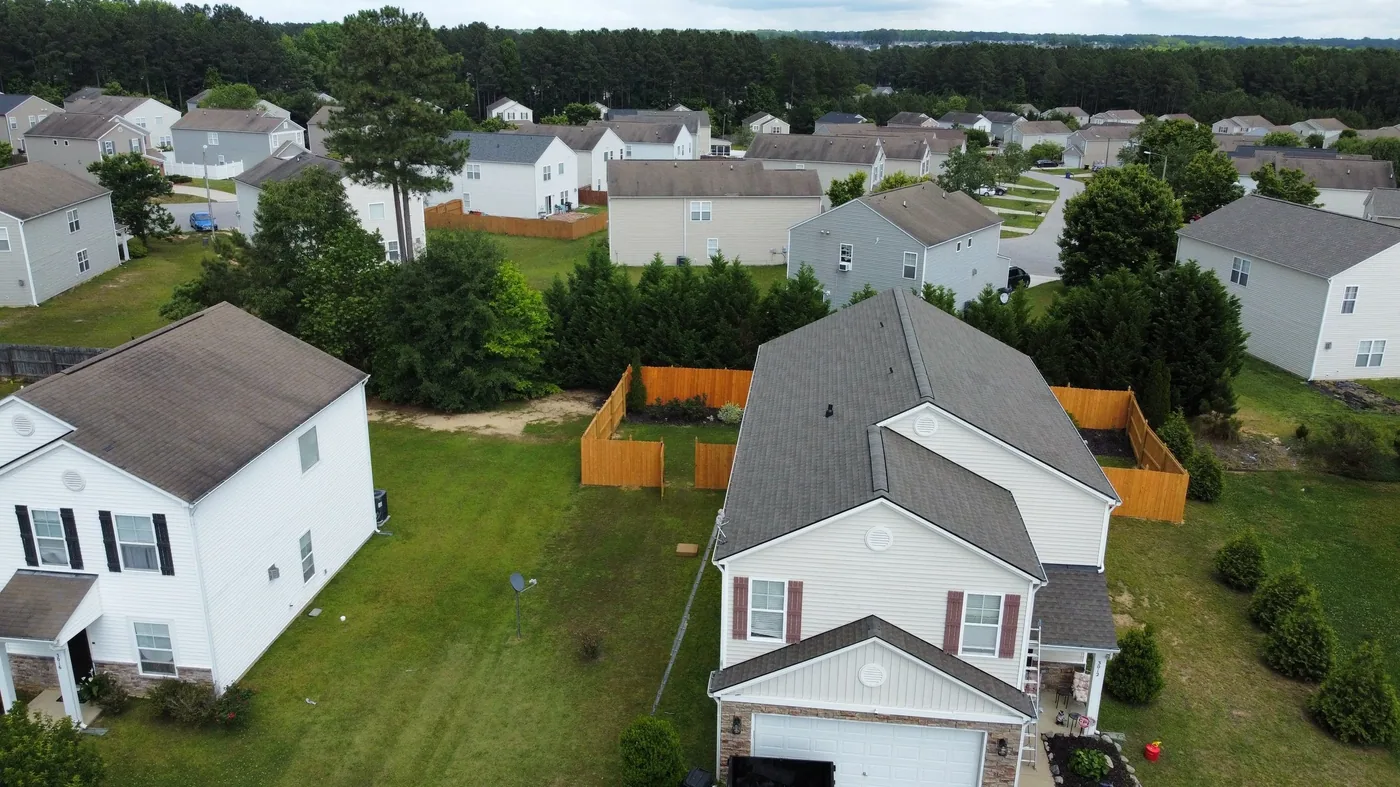
Whether you need a roof replacement, roof repair, or annual inspection, we’ve got you covered.