
Roof flashing types
Seven kinds of flashing, what each is for, and the North Carolina drip edge position in full.
Both are edge metal, both go on at the same moment in a reroof, and they do not do the same job. The short version: if a gutter hangs on that edge, you want the apron.
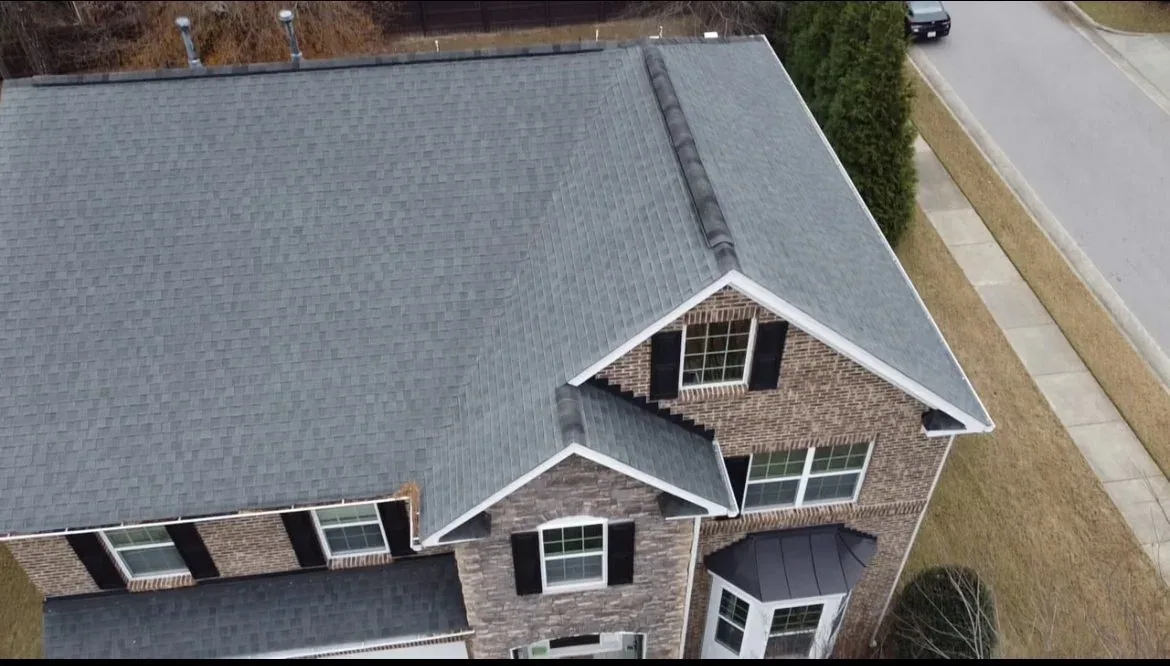
If you only read this block, you have the answer.
A drip edge throws water off the deck. It is an L, fitted along the eaves and up the rakes, and its turned-out lip keeps water from curling back onto the fascia board. It is the one almost everybody means when they say edge metal.
A gutter apron puts water inside the gutter. It is wider, with a longer leg bent down so it finishes in the trough rather than above it. That extra reach is the whole product. It covers the gap between the deck edge and the back of the gutter, which is where water gets behind a gutter that has sagged a little.
Use the apron where there are gutters and the drip edge where there are not. On a normal house that means apron along the eaves, drip edge up the rakes. Fitting a plain drip edge above a gutter is not wrong, it is just the weaker of the two in the one place water most often gets in.
Shape, where it goes and what it is actually doing. Nothing here is a cost figure, because edge metal is priced with the roof rather than on its own.
| Part | Shape | Where it goes | What it does |
|---|---|---|---|
| Drip edge | L-shaped, short leg turned down and out | Eaves and rakes, under the underlayment at the eave and over it at the rake | Throws water clear of the fascia and stiffens the deck edge |
| Gutter apron | Wider L or shallow Z, long leg bent down into the gutter | Eaves only, where a gutter is hung | Carries water over the fascia board and drops it inside the gutter |
The order matters more than the profile does. Underlayment laps over edge metal at the eave and under it at the rake. Get that backwards and you have built a funnel that delivers water to the deck edge instead of past it. It is the single most common edge-metal mistake we find on a roof someone else finished, and it is invisible from the ground.
Four situations that come up on Raleigh houses, and what each calls for.
| Situation | What to use | Why |
|---|---|---|
| There is a gutter on that edge | Gutter apron | A drip edge can release water behind a gutter that has sagged or been hung slightly low. The apron's longer leg reaches past that gap. |
| It is a rake edge, no gutter | Drip edge | There is nothing to drop water into. The job is to keep it off the rake board and the siding below. |
| The fascia is already stained or soft | Gutter apron | Staining under a gutter line is usually water tracking back along the underside of the deck. The apron is the part that stops it. |
| Gutters go on after the roof | Gutter apron, fitted with the roof | Retrofitting an apron under a finished shingle course means lifting and resealing it. Decide before the roof goes on, not after. |
In North Carolina, no, not independently. The model code section that requires a drip edge was deleted here, and the State Fire Marshal's engineering division confirmed as much when asked directly about a residential shingle roof.
That sounds like a loophole and it is the opposite. Deleting the code section hands the decision to the shingle manufacturer's printed installation instructions, and most of the major manufacturers do require edge metal. Those instructions are also what your warranty is written against, so skipping edge metal to save a few dollars can cost you the cover on the whole roof.
We set the dimensions, the lap and the fastener spacing out in full on our flashing guide, along with the exact wording of the North Carolina position, so it is not repeated here. Roof flashing types, including drip edge is the page for that.
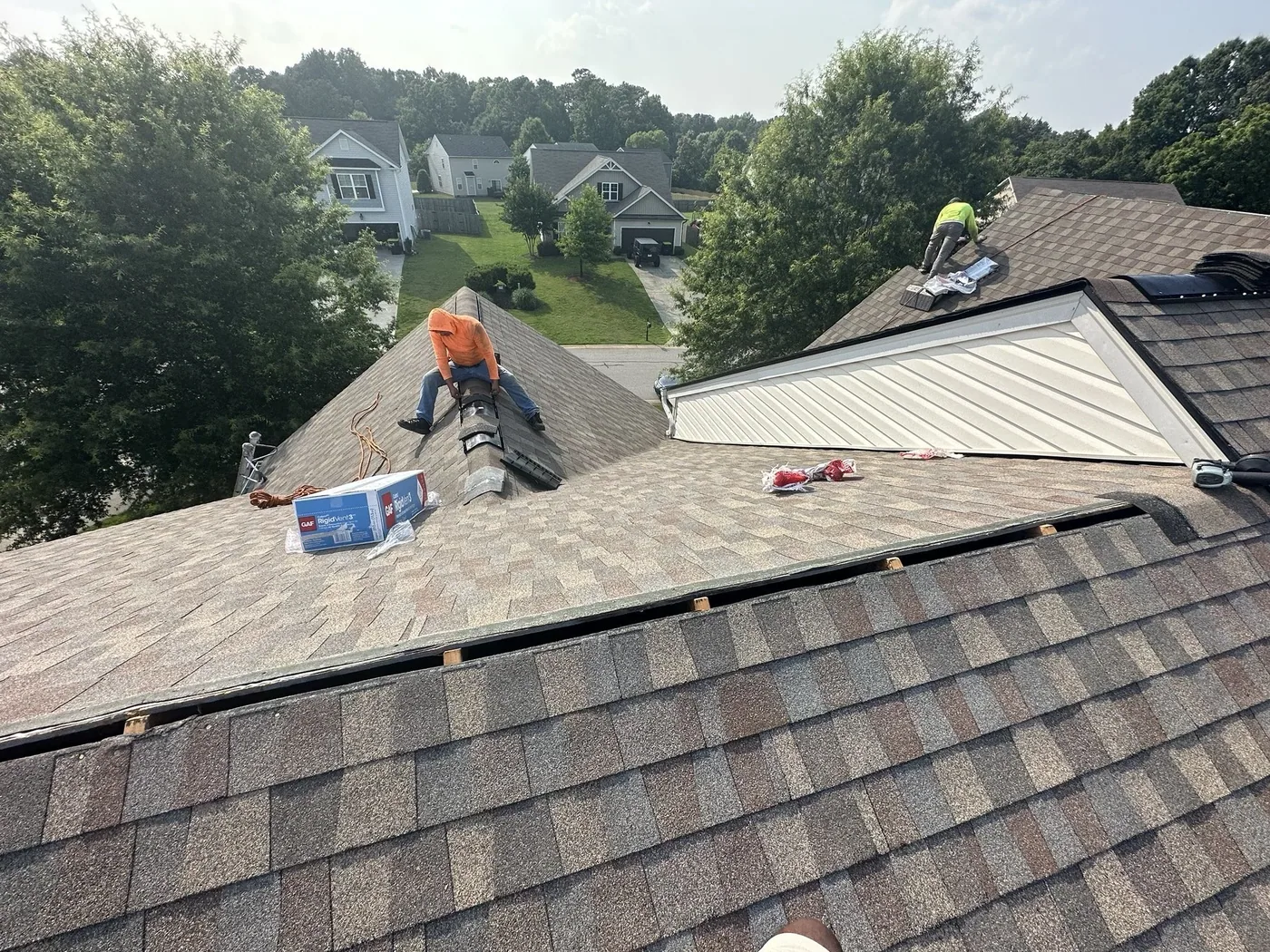
Edge metal sits between the roof and the gutters, so these are the pages on both sides of it.
Seven kinds of flashing, what each is for, and the North Carolina drip edge position in full.
5 inch against 6 inch, K-style against half round, and how much roof each one actually drains.
What a gutter run costs per foot here, by material and by house.
Seamless aluminum formed on site, hung with the edge metal fitted properly underneath.
The boards edge metal protects, and what it costs when water has been getting behind them.
Six systems compared, and the one that fails in pine country.
Taken from what Google already shows for this search.
Along the eave, on top of the roof deck, with its long leg bent down so it finishes inside the gutter. The underlayment laps over the part sitting on the deck. The gutter is then hung so the apron's lower leg is inside the trough rather than above or behind it. If the apron ends up behind the gutter it is doing nothing at all.
It can, and on a lot of houses it does. It is just the weaker choice there. A drip edge turns water out and down over a short lip, and if the gutter has sagged or was hung a touch low, some of that water finds the back of the gutter and runs down the fascia instead. A gutter apron reaches further and lands the water inside the trough.
At the rake you can often slide a new piece under the edge of the shingles. At the eave you cannot, because the underlayment laps over it and the first course is sealed down onto it. That edge means lifting the first course, which is why edge metal is usually replaced during a reroof rather than on its own.
Not independently. North Carolina deleted the model code section that requires it, and the State Fire Marshal's engineering division confirmed that when asked directly. What that does is hand the decision to the shingle manufacturer's printed instructions, and most of the major manufacturers do require edge metal. Our roof flashing guide has the detail and the wording.
Three, in the order we find them. The apron or drip edge ending up behind the gutter rather than inside it. Edge metal lapped the wrong way, so water runs into the joint rather than over it. And underlayment run the wrong side of the metal: it goes over at the eave and under at the rake, and getting that backwards undoes the point of fitting it.
On the same edge there is no reason to. On the same roof, yes, and it is normal: apron along the eaves where the gutters hang, drip edge up the rakes where there is nothing to catch the water.
We get on the roof, photograph what is actually there, and hand you a written report with a price. No charge, and no obligation to book the work with us. If the roof has years left in it, that is what the report will say.
Whether you need a roof replacement, roof repair, or annual inspection, we’ve got you covered.