
A stabilizer for the ladder
The single most useful thing on this list. It stands the ladder off the gutter so your weight is on the fascia rather than on the gutter lip, which is how gutters get bent during a cleaning.
The job itself is simple: solids out, water through, check the fascia. What decides whether you should do it yourself is not skill, it is whether every run is reachable from a properly set ladder.
Three of the top ten results for this search are about avoiding the ladder, so this is clearly the question underneath it.
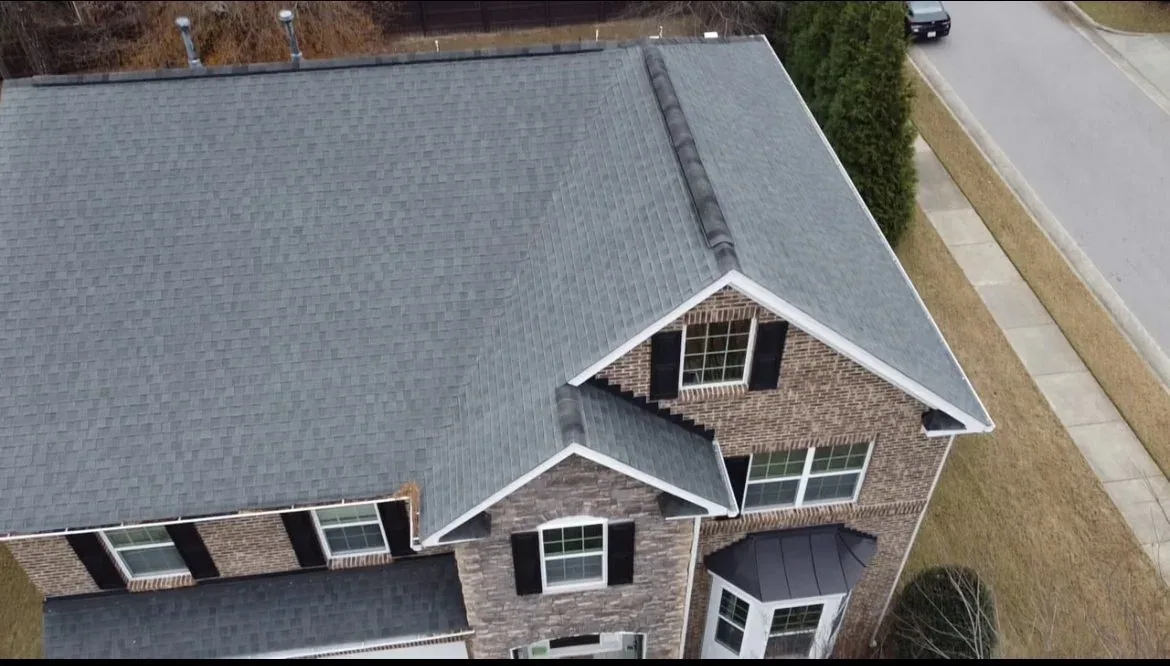
You never need to be on the roof. Gutter cleaning is a ladder job. Climbing onto the roof to reach down into the gutter puts you on the slipperiest part of the roof, facing downhill, pulling against your own weight. If someone tells you to do it from above, ignore them.
Ground-level tools work on some houses. A curved wand on a hose, or a vacuum attachment, will clear a dry single-story gutter well enough. What neither will do is tell you whether the downspout runs clear or whether the fascia behind the gutter has gone soft, which is most of the value of the visit.
The honest cut-off is reach. If any run needs you to lean, stand on the top rung, or work off a ladder on a slope, that run is not a DIY run. The CDC counted 113 fatal ladder falls and about 34,000 treated in emergency departments in 2011, and those figures cover workers, who do this for a living with training.
None of it is expensive and the first one saves more gutters than the other four together.
The single most useful thing on this list. It stands the ladder off the gutter so your weight is on the fascia rather than on the gutter lip, which is how gutters get bent during a cleaning.
A metal edge gouges the sealant at the seams and the inside of an aluminum trough. A cheap plastic scoop does the same job without leaving somewhere new for water to sit.
Debris in a bucket rather than on the lawn. A hook on the ladder means you are not holding the bucket and the ladder at once.
For flushing after the solids are out. The flush is the part that tells you whether the downspouts are clear, which is the whole point.
Wet gutter debris holds roofing nails, screws and the occasional dead animal. This is not a bare-hands job.
The order is the part people get wrong, particularly flushing before scooping.
Soaked debris is heavy and it smears. Bone dry debris turns to dust and blows back at you. A couple of days after rain is the easy middle.
Four feet out at the base for every twelve feet of height, feet on firm ground, and a stabilizer against the fascia. Then the rule that matters: move the ladder rather than reaching. Every gutter that gets bent and most people who come off a ladder were reaching.
Start at the far end and work toward the outlet so you are not pushing a plug down the pipe ahead of you. Bucket, not lawn.
Water in at the high end and watch the outlet. A good flush runs clear and fast. A slow one means the downspout is partly blocked and a flush will not fix it.
Tap along the pipe to find where the sound changes, then put the hose up from the bottom outlet rather than down from the top. Pushing a plug further down a pipe is how a simple blockage becomes a disassembly job.
This is the part worth more than the cleaning. Soft or dark fascia behind the gutter, nails backing out, a gutter that has pulled away at one hanger: all of it is visible from the ladder and none of it is visible from the ground.
Twice a year is the standard answer and it is right under hardwoods: once after the oaks drop in late fall, once in spring. Late November or early December is the single best time if you only do it once.
Pines change the answer. Angi's guidance is four times a year under pines against twice under oaks, because needles come down all year rather than in one go. Plenty of older Raleigh neighborhoods are under pines, which is also the honest test of whether guards would pay for themselves on your house. Our gutter guards guide compares six systems, including the one that fails in pine country.
The reason the frequency matters is not the gutter. It is the fascia board behind it. A gutter that overflows all winter keeps that board wet, and a rotten fascia is a carpentry job rather than a cleaning one.
Taken from what Google already shows for this search.
Our own cost guide puts the Raleigh average at $117 with a local spread of roughly $50 to $250, against a national average that two publishers disagree about by 60 percent. Lamar Homes gutter cleaning starts at $325, and the reason for the gap is in the next answer.
No, it is a normal price for a straightforward single-story house, and plenty of jobs are done for less. What varies is what the visit includes. Ours starts at $325 because it includes flushing every downspool, correcting hanger pitch where it has dropped, and photographing the roof edge and fascia. A $250 visit that clears the trough and leaves is not the same product at a better price.
Late November or early December here, after the hardwoods have finished dropping. Under pines the answer is different, because pine needles come down all year. If you only do it once, do it when the oaks are bare.
You should not be on the roof for this anyway. Gutter cleaning is done from a ladder, standing off the gutter with a stabilizer. Getting onto the roof to reach down into the gutter puts you on the slipperiest part of the roof facing the wrong way.
You do not. A second-story gutter over a slope, a gutter above a conservatory roof, or anything you can only reach by leaning is the point at which this stops being a weekend job. The CDC counted 113 fatal and about 34,000 emergency-department-treated ladder fall injuries among workers in 2011, and those were people who do it for a living with training.
Twice a year under hardwoods. Angi's guidance is four times a year under pines, which is most of the older Raleigh neighborhoods, and that is the honest test of whether guards would pay for themselves on your house.
Cleaning, guards and the boards behind the gutter are one subject, so these are the rest of it.
From $325, cleared by hand, every downspout flushed and the roof edge checked.
Per foot and per visit here, and why the national averages are 60 percent apart.
Six systems compared, and the one that fails under pines.
5 inch against 6 inch, and how much roof each one actually drains.
What rots when a gutter overflows all winter, and what it costs to put right.
When the run has sagged past correcting, seamless aluminum formed on site.
We get on the roof, photograph what is actually there, and hand you a written report with a price. No charge, and no obligation to book the work with us. If the roof has years left in it, that is what the report will say.
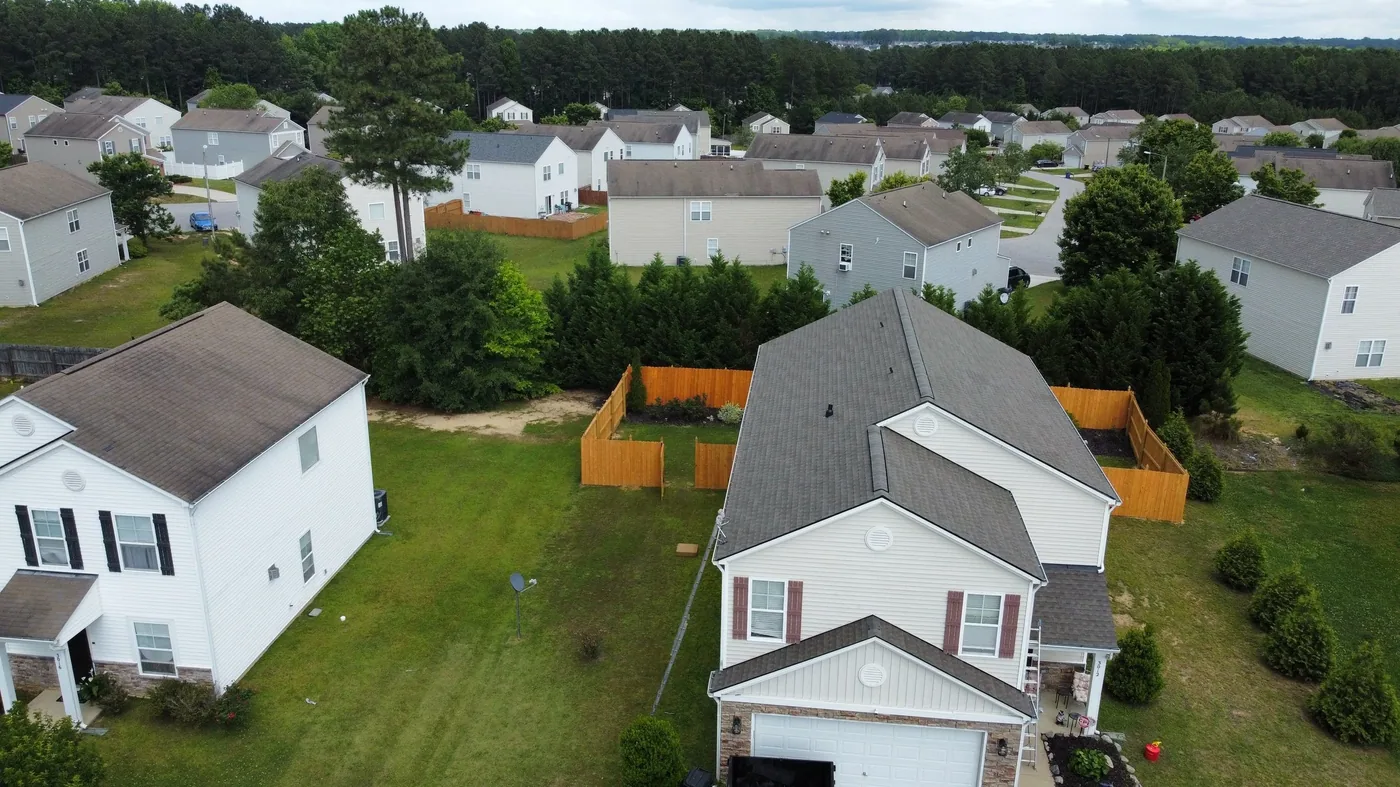
Whether you need a roof replacement, roof repair, or annual inspection, we’ve got you covered.