
Types of roof shingles
3-tab, architectural and the premium lines, and which decision actually matters.
Nobody searches for starter shingles until a roofer mentions them or a quote leaves them out. They are two of the cheapest lines on a reroof and two of the easiest to substitute without telling you.
Three things. The third is why this page is worth your five minutes before you sign anything.
A starter shingle is a solid strip that goes down first, at the eave. No cutouts, no tabs, and its factory sealant line positioned specifically to catch the first course of shingles where that course is most exposed. Everything else on the roof is laid off it.
Hip and ridge shingles are the caps that finish the edges. Thicker and pre-shaped so they bend over a hip or a ridge without cracking. They cover the most exposed line on the whole roof.
Both get substituted with cut-up field shingles. It is legal, it is common, and it is the difference between a quote that looks cheaper and a roof that is. The manufacturer's installation instructions name these parts, and in North Carolina those instructions are the document that decides what your roof is required to have.
All four stop happening when it is cut from a field shingle instead.
| What it does | How | Why it matters |
|---|---|---|
| Seals the first course down | Factory adhesive, positioned at the eave | The first course has nothing below it to bond to. A starter puts a sealant strip exactly where the shingle tab needs to grab. |
| Covers the first course joints | Solid strip, no cutouts | The gaps between the first row of shingles sit directly over the deck. A solid starter is what is under those gaps. |
| Gives the eave a straight edge | Uniform width off the bundle | Every course above is set off the first one. A wandering starter line shows all the way up the roof. |
| Carries the wind rating | Named in the installation instructions | Manufacturers set their wind terms assuming a starter is there and placed as published. |
The sealant position is the whole argument. On a field shingle the adhesive sits where the next course up will land. Cut that shingle and lay it at the eave and the adhesive is now somewhere in the middle of the strip rather than near the edge, which is exactly where wind gets under a first course. The strip looks right from the driveway and is not doing the one job it was put there for.
Check the wrapper rather than a rule of thumb: every manufacturer packages these differently, and starter sold on a roll covers a different length again.
GAF publishes about 120.33 linear feet for a bundle of Pro-Start, from 19 full sheets that split into 38 pieces at 6.5 by 38 inches. GAF's product page is here. We are quoting one manufacturer deliberately rather than publishing a table of all of them, because the figures move with the product and a stale table is worse than none.
What to do with that number. Measure the eaves, not the whole perimeter, unless the instructions for your shingle call for starter up the rakes as well, which several now do. Add the rakes if so. That is your linear footage, and it is a line your quote should already contain.
A hip or ridge cap has to bend through a sharp angle and stay bent, outdoors, through every temperature this state produces.
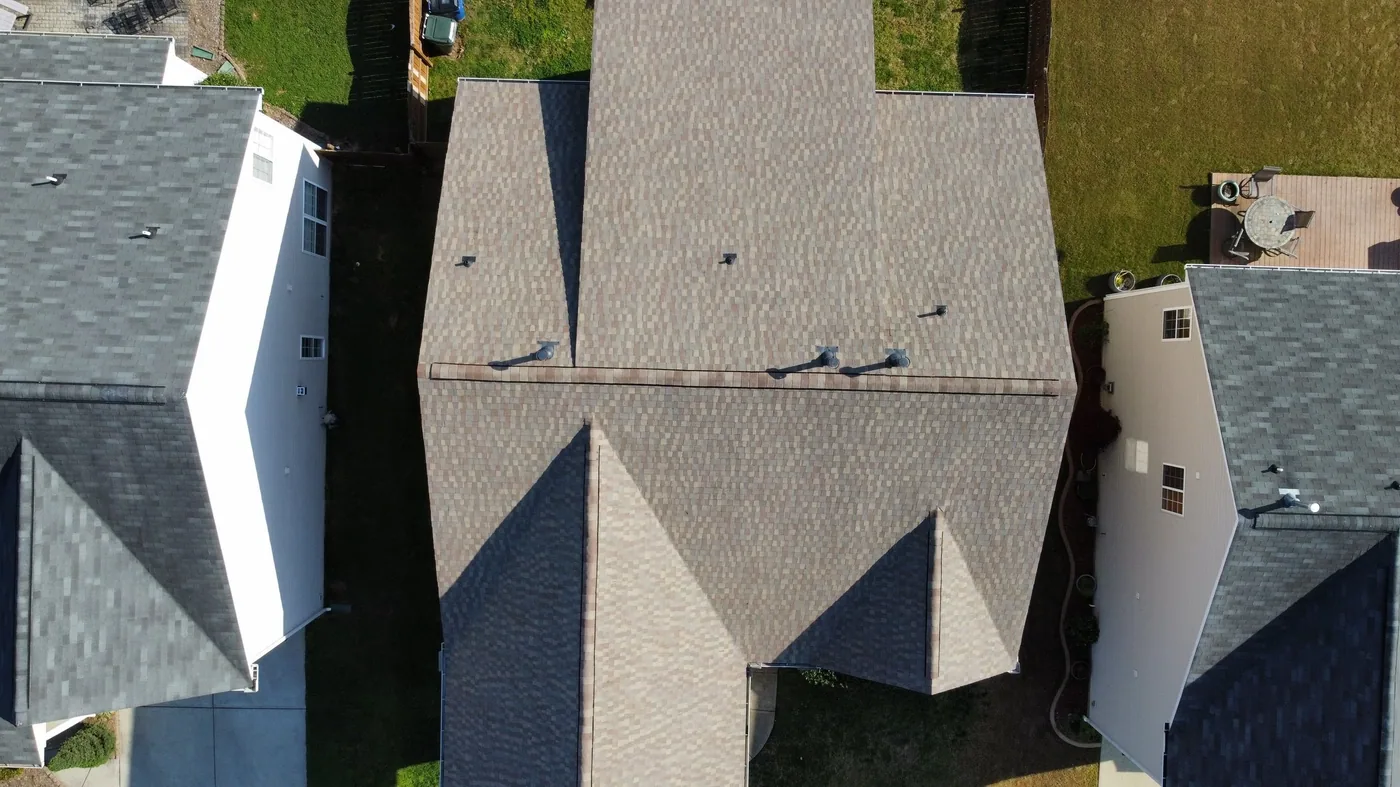
Architectural shingles are laminated, which is what makes them look good and last on a slope, and it is also what makes them a poor thing to fold. Cut into caps and bent over a ridge in cold weather, the laminate starts fine and opens up over the following couple of winters. The cracks appear along the ridge line, which is the most wind-exposed and most visible part of the roof.
Purpose-made caps are formed for the bend and are a small line on a quote. If your quote does not name them, ask what is going on the ridge before you sign it.
None of these is expensive. All of them are easy to leave unnamed.
Starter, named by product. Not "starter course" or "eave treatment". A product name means a product is being bought.
Hip and ridge, named by product. Same reason. "Ridge cap" on its own can mean cut field shingles.
Underlayment, named by type. Felt and synthetic are different purchases, and our underlayment guide compares them on cost per square.
Edge metal, named and located. Eaves, rakes, or both. Our gutter apron against drip edge guide covers which belongs where.
The parts around the starter strip, and the quote it should appear on.
3-tab, architectural and the premium lines, and which decision actually matters.
GAF, CertainTeed, Owens Corning and IKO on published wind ratings and warranties.
Felt against synthetic against peel-and-stick, on cost per square.
The other part of the eave, and which profile belongs on it.
Substituted parts are on this list, along with the ones that cost a great deal more.
What we fit as standard, named line by line.
Taken from what Google already shows for this search.
No, and the difference is where the glue is. A starter is a solid strip with its sealant line positioned to catch the first course of shingles at the eave. A field shingle has cutouts and its sealant sits where the course above will land. Turn a field shingle into a starter and the adhesive ends up in the wrong place, which is the whole problem.
Roofers have done it for decades and it is still the most common shortcut on a cheap quote. Two things happen. The sealant strip ends up too far up the shingle to grip the first course properly at the edge, and the cutouts, if the tabs are not removed, leave gaps over the deck at the eave. It also steps outside the installation instructions, which in North Carolina is the document that decides what is required at all.
It varies by product, so check the wrapper rather than a rule of thumb. GAF publishes about 120.33 linear feet for a bundle of Pro-Start, from 19 full sheets split into 38 pieces at 6.5 by 38 inches. Other manufacturers package differently, and a starter sold on a roll covers a different length again.
They are thicker, pre-shaped caps made to bend over an edge without cracking. You can cut field shingles into caps, and on an architectural shingle it is a bad idea: the laminated layer is stiff, and bending it over a ridge in Carolina cold starts the cracks that show up two winters later. Purpose-made caps are a small line on a quote and the most exposed part of the roof.
Less a brand question than an age and spec one. Anything already discontinued, because you will never match it for a repair. Anything rated below 110 mph here. And on a reroof, any quote that does not name the starter, the caps and the underlayment as separate lines, because the ones left unnamed are the ones being substituted.
Look up at the eave from the ground with the light behind you. A proper starter gives a clean, unbroken line with the first course sitting tight on it. Cut 3-tab usually shows a slightly ragged edge and, after a few seasons, first-course tabs that lift at the corners. We photograph the eave on every inspection, so you can see yours without going up.
We get on the roof, photograph what is actually there, and hand you a written report with a price. No charge, and no obligation to book the work with us. If the roof has years left in it, that is what the report will say.
Whether you need a roof replacement, roof repair, or annual inspection, we’ve got you covered.