
10 yard
12 ft 8 in x 8 ft 3 in x 4 ft 4 in. Weight allowance 2 to 3 tons.
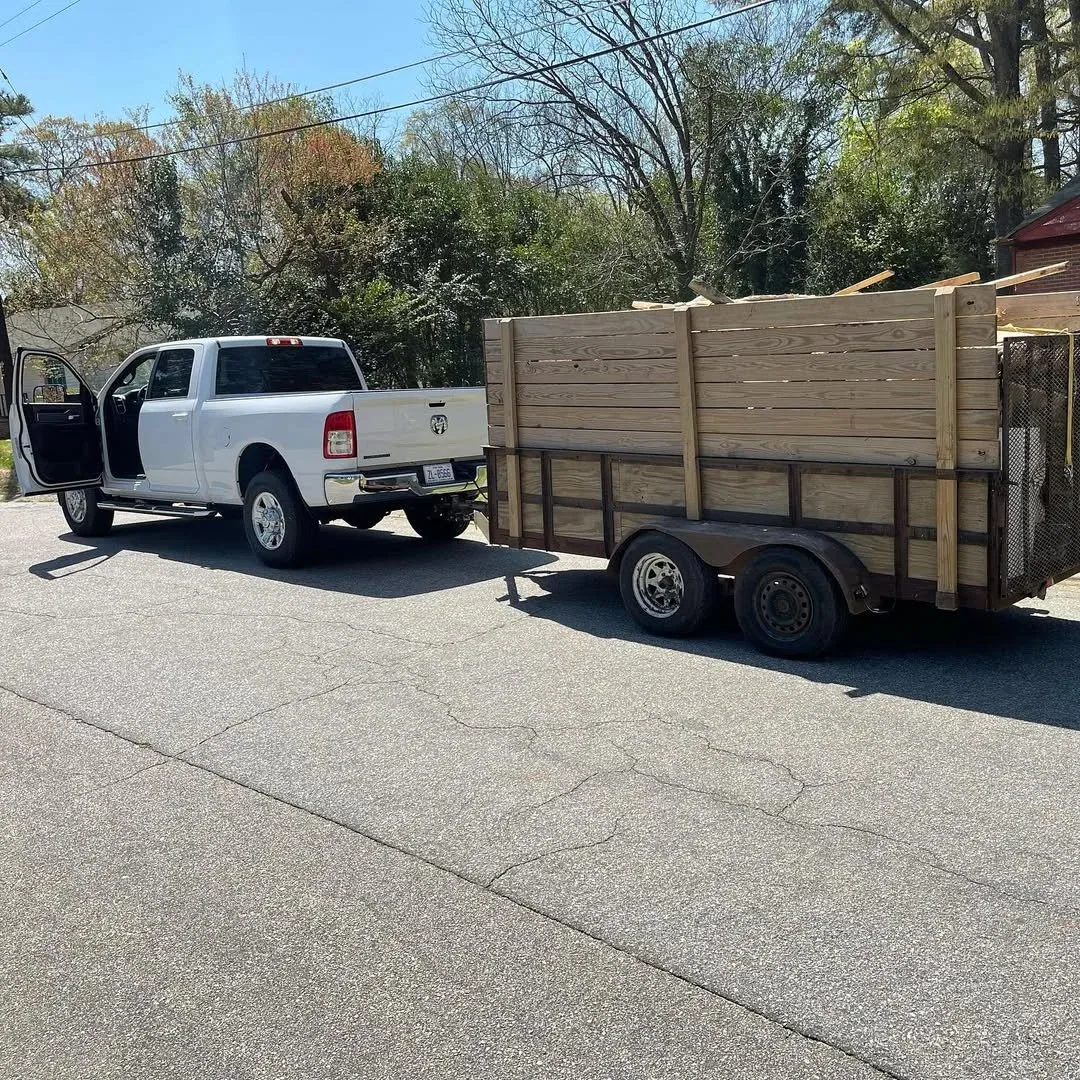
About four pickup loads. A bathroom strip-out, a garage clear, or roughly 15 squares of single-layer shingle tear-off.
Right for. One or two rooms, or a small roof.
Five roll-off sizes, their real dimensions, what each will carry before the weight allowance runs out, and the one most roofing jobs use.
Dimensions and weight allowances as the national haulers publish them. Yours will be within inches of these.
| Size | Dimensions | Weight allowance | Right for |
|---|---|---|---|
| 10 yard | 12 ft 8 in x 8 ft 3 in x 4 ft 4 in | 2 to 3 tons | One or two rooms, or a small roof. |
| 15 yard | 15 ft x 7 ft 8 in x 5 ft 1 in | 2 to 3 tons | A kitchen, a large garage, or a deck tear-out. |
| 20 yard | 22 ft 9 in x 8 ft 3 in x 4 ft 4 in | 4 to 5 tons | A full roof tear-off, or a whole-floor renovation. |
| 30 yard | 23 ft 1 in x 8 ft 3 in x 6 ft 1 in | 6 to 7 tons | A large roof, a whole-house clear-out, or new construction. |
| 40 yard | 23 ft 1 in x 8 ft 3 in x 7 ft 9 in | 8 to 9 tons | Commercial demolition, or a big multi-trade job. |
Dimensions and weight allowances from Republic Services and Waste Management. Local haulers run to the same standard sizes.
Volume is the number people look at. Weight is the number that catches them out.
12 ft 8 in x 8 ft 3 in x 4 ft 4 in. Weight allowance 2 to 3 tons.
About four pickup loads. A bathroom strip-out, a garage clear, or roughly 15 squares of single-layer shingle tear-off.
Right for. One or two rooms, or a small roof.
15 ft x 7 ft 8 in x 5 ft 1 in. Weight allowance 2 to 3 tons.
The awkward middle size, and often the right one. Deeper walls than a 10 without the length of a 20, so it fits a normal driveway.
Right for. A kitchen, a large garage, or a deck tear-out.
22 ft 9 in x 8 ft 3 in x 4 ft 4 in. Weight allowance 4 to 5 tons.
The one most roofing jobs use. Low walls for its capacity, which matters when you are throwing shingle off a roof rather than carrying it up a ramp.
Right for. A full roof tear-off, or a whole-floor renovation.
23 ft 1 in x 8 ft 3 in x 6 ft 1 in. Weight allowance 6 to 7 tons.
Same footprint as a 20 with taller walls, so you gain volume without needing more driveway. The jump in weight allowance is the real difference.
Right for. A large roof, a whole-house clear-out, or new construction.
23 ft 1 in x 8 ft 3 in x 7 ft 9 in. Weight allowance 8 to 9 tons.
Commercial scale. The walls are high enough that loading by hand gets difficult, so it suits machine loading or very bulky light waste.
Right for. Commercial demolition, or a big multi-trade job.
Every size above has two limits, and almost nobody reads the second one. A 20 yard box holds 20 cubic yards of volume and 4 to 5 tons of weight, and which one you hit first depends entirely on what you are throwing away.
Household clear-outs are light and bulky, so you fill the space and never trouble the scale. Roofing is the opposite. A square of asphalt shingle tear-off weighs roughly 250 pounds on a single layer and double that on two, so a 30 square roof with two layers is around 7 tons. That is a 30 yard box on weight while the volume is barely half used.
Going over the allowance is charged per ton and it is not cheap. The other direction costs nothing: a box with room to spare is a box you did not have to swap out mid-job.
Tearing off a roof? Work out your squares on the roofing square calculator first, then pick the box by weight rather than by volume.
Four questions that settle it before you book.
Shingle, tile, plaster, concrete and soil are heavy: pick on the weight allowance. Furniture, packaging, insulation and garden waste are bulky: pick on the volume.
A 20, 30 and 40 all sit on roughly the same footprint, around 23 feet. The 15 is the short one at 15 feet, which is why it suits a tight drive better than its capacity suggests.
A 40 yard box has walls nearly 8 feet tall. If the waste is going in by hand rather than by machine, that is a wall you will regret.
A second haul, which costs more than the next size up would have. Round up one size when you are between two.
The roofing guides behind the tear-off weights above.
Ten Charlotte roofers ranked on rating, reviews and certification.
Eleven Raleigh roofers on the same published bar. We come ninth.
Eight Durham roofers, compared on certification and scope.
3-tab, architectural and luxury, with real cost and lifespan.
GAF, CertainTeed, Owens Corning and IKO on published specs.
Eight materials by installed cost and how long each lasts.
Five guard types on installed cost and real lifespan.
Five decking materials on cost, lifespan and upkeep.
We’re always here to help! Whether you just have a general question or you are wanting to schedule a FREE inspection, fill out the form and someone from our team will be in contact with you.
A 20 yard box handles most single-layer roofs up to about 30 squares. Two layers roughly doubles the weight, so a 30 yard box is the safer call. Weight is the limit on roofing waste, not space.
Roughly 250 pounds per square of single-layer asphalt shingle, and about double that for two layers. A square is 100 square feet of roof. So a 30 square roof with one layer is around 3.75 tons.
10, 15, 20, 30 and 40 cubic yards. The 20 is the most common on residential jobs and the one most roofing crews use.
It can, on asphalt in summer. The rollers concentrate a lot of weight on a small area. Boards under the rails solve it, and any decent hauler will lay them if you ask.
Not on your own driveway. On the street you usually do, and it varies by town across the Triangle. We handle it when the dumpster is part of our job.
Paint, solvents, oil, batteries, tires, appliances with refrigerant and anything with asbestos. Those need separate disposal and a hauler will refuse the load or charge to sort it.
Still have questions? Call (984) 224-7182 or email clients@lamarhomes.net.
All roofing FAQs
Whether you need a roof replacement, roof repair, or annual inspection, we’ve got you covered.