
Ice and Water Shield Calculator
Eaves, valleys and penetrations in, rolls out. Laps are counted, and the page is honest that North Carolina does not actually mandate this.
Roof pitch & slopeSquares & shinglesReplacement costRoof lifeDeck costGutter costRoof ventilationIce & water shieldRoof trussesAttic insulationDeck boardsDeck stainJunk removal
Standard roll is 36 in by 66.7 ft, 200 sq ft. Includes 10% for the 3 in side laps and 6 in end laps.
Get the roof quoted properlyWhat the code actually says here
Most calculators for this are written for northern roofs, where the IRC requires an ice barrier running from the eave edge to a point at least 24 inches inside the exterior wall line. North Carolina's residential code ties that requirement to places where the average daily January temperature is 25 degrees or lower.
Raleigh's January average is nowhere near that, and neither is anywhere else in the Triangle. So an ice barrier is not code-required on a typical roof here. That is the honest answer, and it is not the same as saying you do not want leak barrier.
Why we still use it
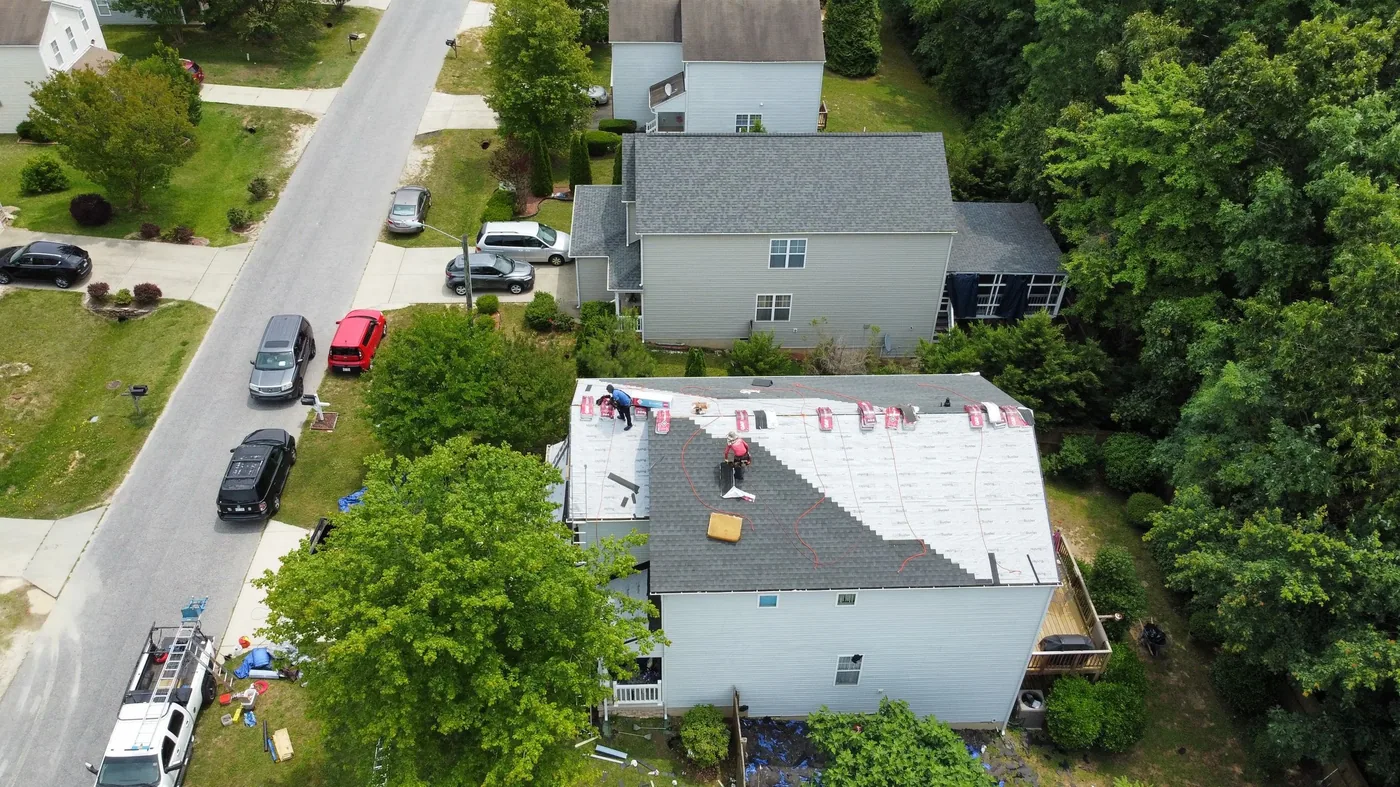
Self-adhering membrane seals around the nails that go through it, which no mechanically fastened underlayment does. That matters in exactly the places water backs up or sits: valleys, the low-slope edge of a porch roof, the up-slope side of a chimney, and around skylights.
It is also what a manufacturer's system warranty expects at those details. GAF and the rest write leak barrier into the spec for valleys and penetrations, so leaving it out to win a bid can quietly cost you the warranty on the whole roof.
How the roll math works
The standard roll is 36 inches wide by 66.7 feet long, which is 200 square feet. Side laps of 3 inches and end laps of 6 inches eat into that, so this calculator adds 10 percent before it divides. Deep overhangs or a roof at 8/12 and steeper need two courses at the eave rather than one.
Pricing the full job? The roofing square calculator handles squares and bundles, and our roof replacement page sets out what a complete system includes.
Common questions
Is ice and water shield required in North Carolina?
Not on a typical Triangle roof. The state code requires an ice barrier only where the average daily January temperature is 25 degrees or lower, and no part of central North Carolina comes close. It is still normal practice in valleys and at penetrations as a leak barrier.
How much does one roll cover?
A standard roll is 36 inches by 66.7 feet, which is 200 square feet. After the three inch side laps and six inch end laps you get nearer 180, which is why this calculator adds ten percent before dividing.
Where should leak barrier go?
Valleys, eaves, low-slope sections, and around chimneys, skylights and walls. These are the places water either backs up or sits, and they are where almost every roof leak we are called out to actually starts.
Do I need one course or two at the eave?
One 36 inch course covers a normal overhang. Two are needed where the overhang is deep, because the coverage is measured back from inside the wall line, and on roofs at 8/12 and steeper where the membrane has to run further up the slope.
Can I install leak barrier over old shingles?
No. Self-adhering membrane needs a clean dry deck to bond to, and laying it over an existing layer wastes the one property that makes it worth using, which is sealing around the fasteners.
Does it void anything to skip it?
It can. Manufacturer system warranties spell out leak barrier at valleys and penetrations, so a roof built without it may not qualify for the coverage the homeowner was sold.
Get your roof quoted properly
We get on the roof, photograph what is actually there, and hand you a written report with a price. No charge, and no obligation to book the work with us. If the roof has years left in it, that is what the report will say.
Give us a call or fill out our form today to schedule your free inspection!
Whether you need a roof replacement, roof repair, or annual inspection, we’ve got you covered.